Quick Answer:
Idioms for smile are figurative expressions that describe happiness, warmth, or subtle emotional reactions.
They help you sound more natural, expressive, and engaging in both speech and writing.
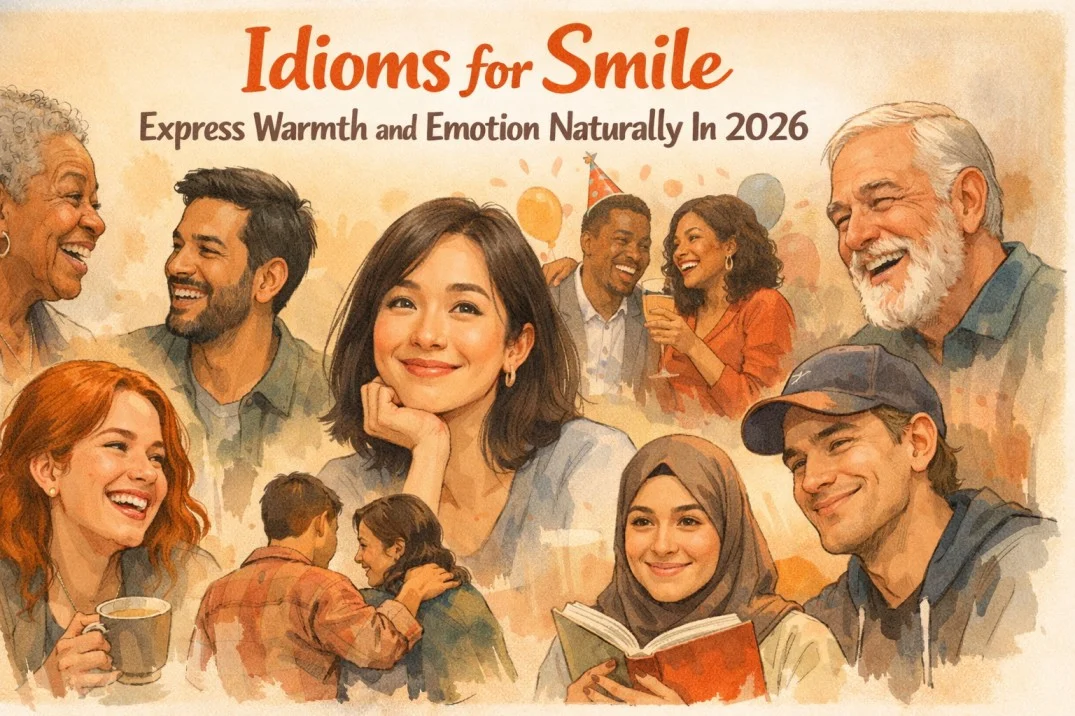
A genuine smile can express happiness, confidence, relief, pride, or even hidden emotions more powerfully than words. That’s why smile idioms and phrases remain an important part of everyday English, helping conversations sound more natural, expressive, and engaging. Whether you’re a student, writer, professional, or English learner, understanding each smile idiom can improve both your speaking and writing while helping you communicate emotions with greater accuracy.
In this guide, you’ll discover 25 Idioms for Smile, including the most common smile idioms used by native speakers in real-life situations. We’ll explain every smile idiom with its meaning, when to use it, alternative expressions, and practical examples. You’ll also learn smile with pride meaning, along with many useful idioms for smile that describe joy, confidence, satisfaction, amusement, and emotional reactions. By the end, you’ll have a complete collection of idioms for smile that you can confidently use in daily conversations, storytelling, and professional communication.
Let’s explore the most expressive idioms that bring smiles to life.
Quick Glance: Popular Idioms for Smile
| Idiom | Tone | Common Use |
|---|---|---|
| Grin from ear to ear | Happy | Excitement, joy |
| Smile like a Cheshire cat | Mischievous | Quiet satisfaction |
| Beam with joy | Radiant | Pride, happiness |
| Force a smile | Uncomfortable | Hiding emotions |
| Smirk | Slightly negative | Arrogance, sarcasm |
Main Idioms for Smile
1. Grin from Ear to Ear
Meaning: To smile very widely due to happiness.
When People Use It: When someone is extremely pleased or excited.
Alternative Expression: Beaming with joy
Examples:
- Formal: He was grinning from ear to ear after receiving the award.
- Casual: She was grinning from ear to ear when she saw the surprise.
- Creative: His face stretched into a grin from ear to ear, like sunshine breaking through clouds.
2. Smile Like a Cheshire Cat
Meaning: To smile in a mysterious or smug way.
When People Use It: When someone knows something others don’t.
Alternative Expression: Smirk knowingly
Examples:
- Formal: She smiled like a Cheshire cat during the negotiation.
- Casual: Why are you smiling like that? Like a Cheshire cat or something.
- Creative: He lingered in the corner, smiling like a Cheshire cat with secrets tucked behind his teeth.
3. Beam with Joy
Meaning: To smile brightly with happiness.
When People Use It: During proud or emotional moments.
Alternative Expression: Glow with happiness
Examples:
- Formal: The parents beamed with joy at their child’s success.
- Casual: She was beaming when she heard the news.
- Creative: Her face beamed with joy, lighting up the room like morning sun.
4. Force a Smile
Meaning: To smile even when you don’t feel like it.
When People Use It: In awkward or uncomfortable situations.
Alternative Expression: Put on a brave face
Examples:
- Formal: He forced a smile despite the disappointing outcome.
- Casual: I just forced a smile and moved on.
- Creative: She stitched a smile across her face, though her eyes told another story.
5. Smile Through Gritted Teeth
Meaning: To smile while feeling angry or frustrated.
When People Use It: In tense or controlled situations.
Alternative Expression: Hide frustration
Examples:
- Formal: She smiled through gritted teeth during the meeting.
- Casual: I was smiling, but honestly, I was annoyed.
- Creative: His smile tightened, held together by clenched teeth and patience.
6. Crack a Smile
Meaning: To show even a small smile.
When People Use It: When someone is usually serious.
Alternative Expression: Break into a smile
Examples:
- Formal: He rarely cracks a smile in professional settings.
- Casual: Wow, you finally cracked a smile!
- Creative: After hours of silence, his lips finally cracked into a reluctant smile.
7. Wipe the Smile Off Someone’s Face
Meaning: To make someone stop feeling pleased.
When People Use It: In competitive or challenging contexts.
Alternative Expression: Bring someone down a notch
Examples:
- Formal: The result wiped the smile off his face.
- Casual: That news really wiped his smile off.
- Creative: Reality arrived swiftly, wiping the smile clean from his face.
8. Keep Smiling
Meaning: Stay positive despite difficulties.
When People Use It: Encouragement or advice.
Alternative Expression: Stay cheerful
Examples:
- Formal: She encouraged her team to keep smiling under pressure.
- Casual: No worries, just keep smiling.
- Creative: Through storms and setbacks, she chose to keep smiling anyway.
9. Smile Sweetly
Meaning: To smile in a kind or polite way.
When People Use It: Social or polite interactions.
Alternative Expression: Smile politely
Examples:
- Formal: She smiled sweetly at the guests.
- Casual: Just smile sweetly and say thanks.
- Creative: She smiled sweetly, her kindness softening every word.
10. Smirk
Meaning: A smug or self-satisfied smile.
When People Use It: Slightly negative tone.
Alternative Expression: Sneer lightly
Examples:
- Formal: He smirked at the comment.
- Casual: Why are you smirking like that?
- Creative: A quiet smirk curled on his lips, hinting at unspoken pride.
11. Light Up (with a Smile)
Meaning: To suddenly look very happy.
When People Use It: Emotional reactions.
Alternative Expression: Brighten instantly
Examples:
- Formal: Her face lit up with a smile upon seeing her friend.
- Casual: His face lit up when he saw the gift.
- Creative: At the sound of her name, his whole face lit up like a festival.
12. Wear a Smile
Meaning: To have a smile on your face continuously.
When People Use It: Describing general mood.
Alternative Expression: Carry a cheerful expression
Examples:
- Formal: She wore a gentle smile throughout the event.
- Casual: He’s always wearing a smile.
- Creative: She wore her smile like a signature quiet but unforgettable.
13. Smile from Ear to Ear (Variation)
Meaning: To show extreme happiness with a very wide smile.
When People Use It: Celebrations, surprises, achievements.
Alternative Expression: Be all smiles
Examples:
- Formal: She smiled from ear to ear as she accepted the recognition.
- Casual: He was smiling from ear to ear after hearing the news.
- Creative: His joy spilled across his face, smiling from ear to ear like a child on Eid morning.
14. All Smiles
Meaning: Completely happy and cheerful.
When People Use It: Light, positive situations.
Alternative Expression: Full of joy
Examples:
- Formal: The team was all smiles after the successful launch.
- Casual: She walked in all smiles today.
- Creative: He arrived all smiles, carrying sunshine into the room with him.
15. Flash a Smile
Meaning: To smile quickly, often briefly.
When People Use It: Polite or quick interactions.
Alternative Expression: Give a quick grin
Examples:
- Formal: She flashed a polite smile at the audience.
- Casual: He just flashed a smile and left.
- Creative: She flashed a smile quick as lightning, but warm enough to linger.
16. A Faint Smile
Meaning: A very slight, subtle smile.
When People Use It: Quiet emotions or restrained reactions.
Alternative Expression: Gentle smile
Examples:
- Formal: A faint smile appeared on his face.
- Casual: I saw a faint smile, he liked it.
- Creative: A faint smile touched her lips, like a secret she chose not to share.
17. A Knowing Smile
Meaning: A smile that shows understanding or hidden knowledge.
When People Use It: When someone understands more than they say.
Alternative Expression: Meaningful smile
Examples:
- Formal: He gave a knowing smile during the discussion.
- Casual: She just gave me that knowing smile again.
- Creative: His knowing smile said everything his words didn’t.
18. Smile to Yourself
Meaning: To smile quietly, often due to a private thought.
When People Use It: Personal reflection or memories.
Alternative Expression: Quietly grin
Examples:
- Formal: She smiled to herself while recalling the moment.
- Casual: I just smiled to myself thinking about it.
- Creative: He smiled to himself, carrying a memory no one else could see.
19. A Tight Smile
Meaning: A controlled or restrained smile, often hiding discomfort.
When People Use It: Formal or tense situations.
Alternative Expression: Forced smile
Examples:
- Formal: She responded with a tight smile.
- Casual: That was a tight smile you okay?
- Creative: His tight smile held steady, barely containing the tension beneath.
20. Break into a Smile
Meaning: To suddenly start smiling.
When People Use It: When emotions shift positively.
Alternative Expression: Light up
Examples:
- Formal: She broke into a smile upon hearing the news.
- Casual: He just broke into a smile out of nowhere.
- Creative: At the sound of laughter, she broke into a smile that softened everything.
21. Smile Broadly
Meaning: To smile widely and openly.
When People Use It: Confident, happy moments.
Alternative Expression: Beam widely
Examples:
- Formal: He smiled broadly at the crowd.
- Casual: She smiled broadly when she saw me.
- Creative: He smiled broadly, as if the world had finally aligned in his favor.
22. Smile Warmly
Meaning: To smile in a kind and welcoming way.
When People Use It: Friendly or emotional interactions.
Alternative Expression: Smile kindly
Examples:
- Formal: She smiled warmly at the visitors.
- Casual: He smiled warmly it made me feel comfortable.
- Creative: She smiled warmly, like a quiet invitation to belong.
23. Hide a Smile
Meaning: To try not to show amusement or happiness.
When People Use It: When holding back laughter or emotion.
Alternative Expression: Suppress a grin
Examples:
- Formal: He struggled to hide a smile.
- Casual: I couldn’t hide my smile at that point.
- Creative: She tried to hide her smile, but it danced at the corners of her lips.
24. Smile Like the Cat That Got the Cream
Meaning: To look very pleased with yourself.
When People Use It: Slightly playful or teasing tone.
Alternative Expression: Smug smile
Examples:
- Formal: He looked like the cat that got the cream after the deal.
- Casual: Why are you smiling like the cat that got the cream?
- Creative: He leaned back, smiling like the cat that got the cream quietly victorious.
25. Hide behind a smile
Meaning: To conceal true emotions
When People Use It: Emotional complexity
Alternative Expression: Mask feelings
- Formal: He hid behind a polite smile.
- Casual: She’s smiling, but something’s off.
- Creative: Her smile was a shield, not a truth.
Practical Usage Guidance
How to Use Idioms Naturally
Start by listening. Notice how native speakers use idioms in conversations, movies, or even social media captions. Then try using one or two in your own speech instead of forcing many at once.
Common Mistakes with Idioms
- Using them in overly formal writing where simple language works better
- Mixing idioms incorrectly
- Using the right idiom in the wrong emotional context
For example, “smirk” carries a negative tone it’s not suitable when describing genuine happiness.
Idioms vs Literal Expressions
Literal: She smiled happily.
Idiomatic: She was grinning from ear to ear.
The second paints a clearer emotional image and feels more natural in storytelling.
Tips for Sounding More Fluent
- Match the idiom with the emotion
- Keep your tone consistent
- Don’t overuse balance is key
How to Remember Idioms Easily
Think in images. Visualizing “ear to ear” or “gritted teeth” makes idioms stick in memory. Also, connect them with real-life situations you’ve experienced.
FAQs
1. Are idioms for smile formal or informal?
Most are informal but widely accepted in everyday writing. Some, like “beam with joy,” work well in formal contexts.
2. Can I use smile idioms in essays?
Yes, especially in descriptive or narrative essays. Just avoid overusing them in academic writing.
3. What’s the difference between grin and smile idioms?
“Grin” usually suggests a wider, more obvious expression, while “smile” can be subtle or polite.
4. How can I sound natural using idioms?
Listen to how native speakers use them and practice in real conversations instead of memorizing lists.
5. Are smile idioms useful in storytelling?
Absolutely. They add emotional depth and help readers visualize characters more vividly.
Conclusion
Learning idioms for smile is more than just memorizing phrases it’s about understanding how emotion flows through language. A simple smile can carry joy, sarcasm, pride, or even discomfort, and idioms help you express those layers with clarity and style.
As you start using these expressions, you’ll notice a shift in how you communicate. Your writing becomes more vivid, your conversations more natural, and your storytelling more engaging. The key is not to rush. Let these idioms become part of your everyday language gradually.
Next time you describe a smile, go beyond the obvious. Choose an expression that captures the feeling behind it. That’s where language truly comes alive.

Loganx River is a passionate writer at IdiomCrafter.com, where he explores the meanings and stories behind everyday expressions. He enjoys breaking down complex phrases into simple, easy-to-understand ideas for readers. When he’s not writing, he spends his time reading and collecting interesting sayings from different cultures.