Quick Answer
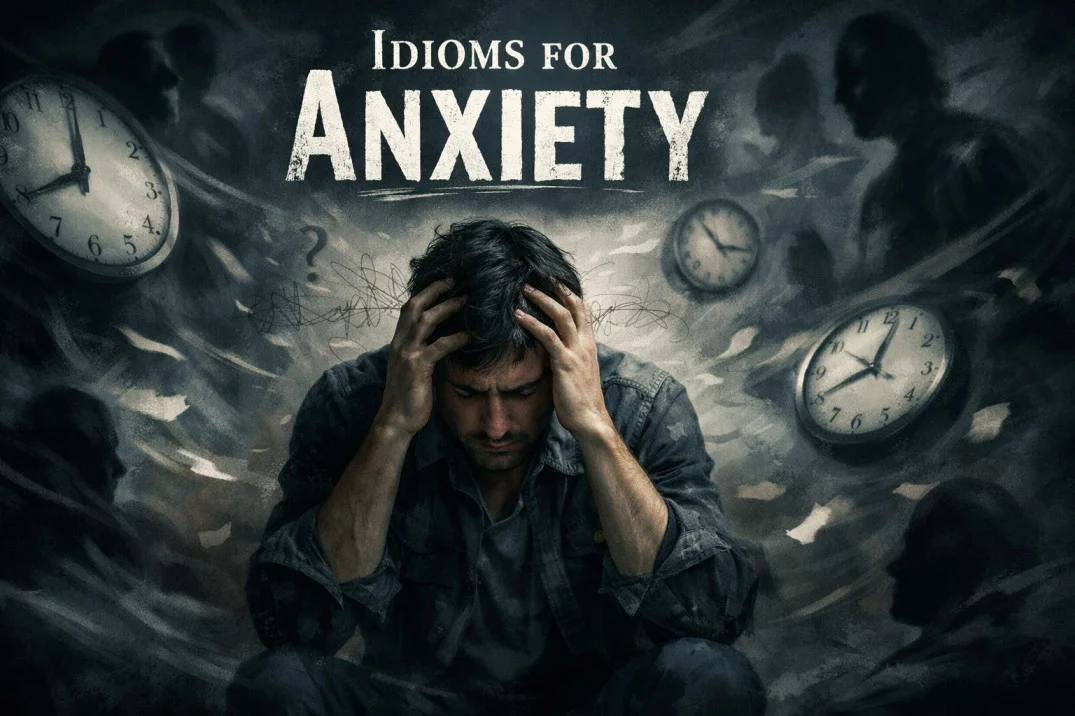
Idioms for anxiety are expressions that describe nervousness, stress, fear, or overthinking in a more vivid and relatable way. They help you sound natural, expressive, and emotionally clear in English.
Anxiety is something almost everyone experiences whether it’s before an important exam, during a stressful situation, or even while overthinking small things. But expressing anxiety in English isn’t always easy. Saying “I’m stressed” or “I’m nervous” can feel repetitive and doesn’t always capture the intensity or nuance of what you’re feeling.
That’s where idioms come in. Idioms for anxiety help you describe emotions like tension, fear, pressure, and uncertainty in a more natural and expressive way. Native speakers often rely on these phrases in everyday conversations, storytelling, and even professional settings to communicate emotional states more effectively.
If you want to sound fluent and emotionally aware in English, learning anxiety-related idioms is essential. In this guide, you’ll explore over 25 powerful idioms grouped by real-life situations, along with meanings, examples, and practical tips to help you actually use them.
Let’s explore the most expressive idioms that bring anxiety and stress to life.
Quick Summary Table
| Situation | Idioms |
|---|---|
| Nervousness | Butterflies in your stomach, On edge, Jumpy |
| Overthinking | Mind racing, Lost in thought, Over your head |
| Pressure | Under pressure, Feel the heat, At breaking point |
| Fear & Panic | Heart in your mouth, Break out in a cold sweat |
| Uncertainty | In two minds, Walking on eggshells |
😰 Idioms for Anxiety With Meanings & Examples
😬 Nervousness & Uneasy Feelings
Not all anxiety is overwhelming sometimes it’s subtle, quiet, and sits gently beneath the surface. These idioms describe those everyday moments when you feel slightly nervous, uneasy, or restless.
1. Butterflies in Your Stomach
This is one of the most widely used idioms to describe that fluttery nervous feeling before something important.
Meaning: Feeling nervous or anxious
When People Use It: Before exams, interviews, performances, or big life moments
Alternative Expression: Feel nervous
Examples:
Formal: She had butterflies in her stomach before the presentation.
Casual: I’ve got butterflies right now.
Creative: Her nerves fluttered like restless wings inside her.
2. On Edge
This idiom reflects a lingering tension that doesn’t easily go away, keeping you alert and slightly uncomfortable.
Meaning: Nervous, tense, or unable to relax
When People Use It: Stressful or uncertain situations
Alternative Expression: Tense
Examples:
Formal: He seemed on edge during the meeting.
Casual: I’ve been on edge all day.
Creative: His thoughts stood sharp, like a wire pulled too tight.
3. Jumpy
When anxiety makes you overly sensitive to even small sounds or movements, this idiom fits perfectly.
Meaning: Easily startled due to nervousness
When People Use It: High-stress or fearful environments
Alternative Expression: Nervous
Examples:
Formal: She appeared jumpy under pressure.
Casual: Why are you so jumpy today?
Creative: Even silence made her flinch.
💡 Usage Insight:
Use these idioms when anxiety is light to moderate, not extreme panic. They’re common in everyday conversations.
🧠 Overthinking & Mental Stress
Sometimes anxiety doesn’t show outwardly it stays inside the mind, turning thoughts into an endless loop.
4. Mind Racing
This idiom captures the feeling of thoughts moving too quickly to control, often caused by stress or worry.
Meaning: Thinking rapidly due to anxiety
When People Use It: Overthinking situations, especially at night
Alternative Expression: Overthinking
Examples:
Formal: His mind was racing before the decision.
Casual: My mind won’t stop racing.
Creative: Thoughts collided like waves in a storm.
5. Over Your Head
When a situation feels too complex or overwhelming, this idiom expresses that mental overload.
Meaning: Beyond understanding or control
When People Use It: Difficult or confusing tasks
Alternative Expression: Overwhelmed
Examples:
Formal: The task was completely over his head.
Casual: This is way over my head.
Creative: The problem rose higher than he could reach.
6. Lost in Thought
This idiom often describes quiet overthinking, where someone is mentally distant and deeply absorbed.
Meaning: Deeply thinking, often worrying
When People Use It: Silent stress or reflection
Alternative Expression: Deep in thought
Examples:
Formal: She seemed lost in thought during the discussion.
Casual: I was just thinking too much.
Creative: Her mind wandered through endless questions.
🔥 Pressure & Stress
Pressure builds gradually, and these idioms reflect the weight, intensity, and emotional strain that comes with responsibilities.
7. Under Pressure
A very common idiom used when someone is dealing with stress or high expectations.
Meaning: Experiencing stress or demands
When People Use It: Work, deadlines, responsibilities
Alternative Expression: Stressed
Examples:
Formal: He performs well even under pressure.
Casual: I’m under so much pressure right now.
Creative: Expectations pressed down like a heavy weight.
8. Feel the Heat
This idiom describes the moment when pressure becomes noticeable and starts affecting performance.
Meaning: Experience increasing stress
When People Use It: Competitive or high-stakes situations
Alternative Expression: Face pressure
Examples:
Formal: The team began to feel the heat.
Casual: I’m really feeling the heat now.
Creative: The pressure rose like a burning sun overhead.
9. At Breaking Point
When stress reaches its limit, this idiom captures that final stage before emotional collapse.
Meaning: About to lose control due to stress
When People Use It: Extreme workload or emotional strain
Alternative Expression: Overwhelmed
Examples:
Formal: She was at breaking point due to workload.
Casual: I can’t take this anymore.
Creative: The tension stretched to its limit.
💡 Memory Tip:
Pressure-related idioms often connect with weight, heat, or limits, making them easier to remember.
😨 Fear, Panic & Intense Anxiety
These idioms describe stronger emotional reactions where anxiety turns into fear or panic.
10. Heart in Your Mouth
A vivid idiom that reflects intense fear, where your heartbeat feels overwhelming.
Meaning: Extremely anxious or frightened
When People Use It: Sudden fear or suspenseful moments
Alternative Expression: Terrified
Examples:
Formal: His heart was in his mouth during the announcement.
Casual: That scared me so much!
Creative: His heartbeat climbed into his throat.
11. Break Out in a Cold Sweat
This idiom highlights the physical reaction of anxiety or fear.
Meaning: Sweat due to fear or anxiety
When People Use It: Panic or high-stress situations
Alternative Expression: Panic
Examples:
Formal: He broke out in a cold sweat before speaking.
Casual: I was sweating from stress.
Creative: Fear chilled him from the inside out.
12. Have a Nervous Breakdown
Used when stress becomes overwhelming and leads to emotional collapse.
Meaning: Lose emotional control due to extreme stress
When People Use It: Severe anxiety situations
Alternative Expression: Emotional collapse
Examples:
Formal: He nearly had a nervous breakdown.
Casual: I feel like I’m losing it.
Creative: His thoughts shattered under pressure.
⚖️ Uncertainty & Emotional Conflict
Anxiety often comes from indecision and emotional confusion, and these idioms capture that internal struggle.
13. In Two Minds
This idiom describes being stuck between choices, unable to decide clearly.
Meaning: Unable to make a decision
When People Use It: Confusion or hesitation
Alternative Expression: Indecisive
Examples:
Formal: She was in two minds about the decision.
Casual: I can’t decide what to do.
Creative: Her thoughts pulled her in opposite directions.
14. Walking on Eggshells
This expression reflects a tense emotional environment where you must act carefully.
Meaning: Being very careful to avoid conflict
When People Use It: Sensitive or fragile situations
Alternative Expression: Be cautious
Examples:
Formal: He felt like he was walking on eggshells.
Casual: I have to be super careful around them.
Creative: Every step felt fragile and uncertain.
15. In a Tight Spot
When circumstances become difficult and stressful, this idiom fits perfectly.
Meaning: In a difficult or stressful situation
When People Use It: Problems or pressure
Alternative Expression: In trouble
Examples:
Formal: He found himself in a tight spot.
Casual: I’m stuck in a bad situation.
Creative: The situation closed in around him.
😵 Physical Signs of Anxiety
Anxiety doesn’t just stay in the mind it often shows itself through physical reactions.
16. Lose Sleep Over Something
This idiom highlights how worry can affect rest and peace of mind.
Meaning: Worry a lot about something
When People Use It: Stressful or emotional concerns
Alternative Expression: Overthink
Examples:
Formal: He lost sleep over the issue.
Casual: I couldn’t sleep because of it.
Creative: The night offered no peace to his thoughts.
17. Shake Like a Leaf
A clear image of visible fear or anxiety through physical trembling.
Meaning: Tremble due to fear or nervousness
When People Use It: Intense nervous moments
Alternative Expression: Tremble
Examples:
Formal: She was shaking like a leaf.
Casual: I was shaking so much!
Creative: Fear ran through him like a storm.
18. Heart Skips a Beat
This idiom captures a sudden moment of shock, fear, or anxiety.
Meaning: Sudden emotional or anxious reaction
When People Use It: Surprising or scary moments
Examples:
Formal: His heart skipped a beat.
Casual: That scared me for a second.
Creative: Time paused for a single heartbeat.
🤝 Social Anxiety & Everyday Stress
These idioms reflect anxiety in social interactions and daily life situations.
19. Feel Out of Place
When someone feels uncomfortable in a particular environment.
Meaning: Feel awkward or uncomfortable
When People Use It: Social gatherings or unfamiliar settings
Alternative Expression: Awkward
Examples:
Formal: She felt out of place at the event.
Casual: I felt awkward there.
Creative: She stood like a stranger in a crowd.
20. Put Someone on the Spot
This idiom describes sudden pressure placed on someone to respond or perform.
Meaning: Make someone feel pressured
When People Use It: Unexpected questioning or attention
Examples:
Formal: He was put on the spot during the meeting.
Casual: That question stressed me out.
Creative: The moment demanded an answer instantly.
21. Out of One’s Comfort Zone
A very common expression for situations that feel unfamiliar or challenging.
Meaning: In a new or uncomfortable situation
When People Use It: Trying something new
Alternative Expression: Unfamiliar situation
Examples:
Formal: He stepped out of his comfort zone.
Casual: This feels new and scary.
Creative: He walked beyond what felt safe.
💡 Usage Insight:
These idioms are extremely useful in daily conversations, especially when talking about social or emotional discomfort.
⚡ High Anxiety & Emotional Overload
At the highest level, anxiety becomes overwhelming, intense, and hard to control.
22. At Your Wits’ End
This idiom describes reaching the limit of patience and emotional strength.
Meaning: Extremely frustrated or anxious
Alternative Expression: Mentally exhausted
Examples:
Formal: She was at her wits’ end.
Casual: I’m so done with this.
Creative: Her patience had nowhere left to go.
23. Freak Out
A very common modern expression for sudden panic or emotional overload.
Meaning: Panic suddenly
Alternative Expression: Panic
Examples:
Formal: He began to panic.
Casual: I totally freaked out!
Creative: Fear exploded without warning.
24. Stress Out
This idiom describes becoming overwhelmed by worry or pressure.
Meaning: Become anxious
Alternative Expression: Get stressed
Examples:
Formal: He tends to stress out easily.
Casual: Don’t stress out.
Creative: Worry wrapped around him tightly.
25. Panic Attack
A strong and intense form of anxiety that affects both mind and body.
Meaning: Sudden episode of intense anxiety
When People Use It: Extreme emotional distress
Examples:
Formal: She experienced a panic attack.
Casual: I felt like I was panicking.
Creative: Fear rose like a wave crashing inside.
💡 Final Insight:
Anxiety-related idioms often connect deeply with physical sensations, emotional pressure, and mental overload, making them powerful tools for expressing complex feelings in simple words.her.
💡 Practical Usage Guide
How to Use Idioms Naturally
- Use them in conversations, not every sentence
- Match intensity (don’t use extreme idioms casually)
- Keep sentences simple
Common Mistakes
- ❌ Overusing idioms
- ❌ Using wrong emotional intensity
- ❌ Mixing idioms incorrectly
Where NOT to Use
- Medical or professional diagnosis
- Formal academic writing
Practice Method
- Learn 2–3 idioms daily
- Write personal sentences
- Speak them in real situations
Memory Technique
Connect idioms with physical feelings
Example: “Butterflies” → nervous stomach
❓ FAQs
1. Why learn idioms for anxiety?
They help express emotions more naturally and clearly.
2. Are these idioms commonly used?
Yes, especially in spoken English.
3. Can I use them in formal writing?
Only some most are informal.
4. How do I remember them easily?
Use them in daily conversations.
5. Are they useful for exams?
Yes, they improve writing quality and expression.
🎯 Conclusion
Anxiety is a complex emotion but with the right words, you can express it clearly and naturally. Idioms allow you to go beyond basic vocabulary and describe stress, fear, and nervousness in a way that feels real and relatable.
From “butterflies in your stomach” to being “at your wits’ end,” each idiom reflects a different shade of anxiety. The goal isn’t to memorize all of them at once, but to start using a few in your daily conversations.
Because when you learn to express emotions effectively, your language becomes more powerful, more human, and far more impactful.
Read More Related Articles:
- Idioms for Happiness | Express Joy Like a Native Speaker In 2026
- Idioms for Scared | Express Fear Like a Native Speaker In 2026
- Idioms for Sadness | Expressing Deep Emotions Through Language In 2026

Loganx River is a passionate writer at IdiomCrafter.com, where he explores the meanings and stories behind everyday expressions. He enjoys breaking down complex phrases into simple, easy-to-understand ideas for readers. When he’s not writing, he spends his time reading and collecting interesting sayings from different cultures.