Quick Answer
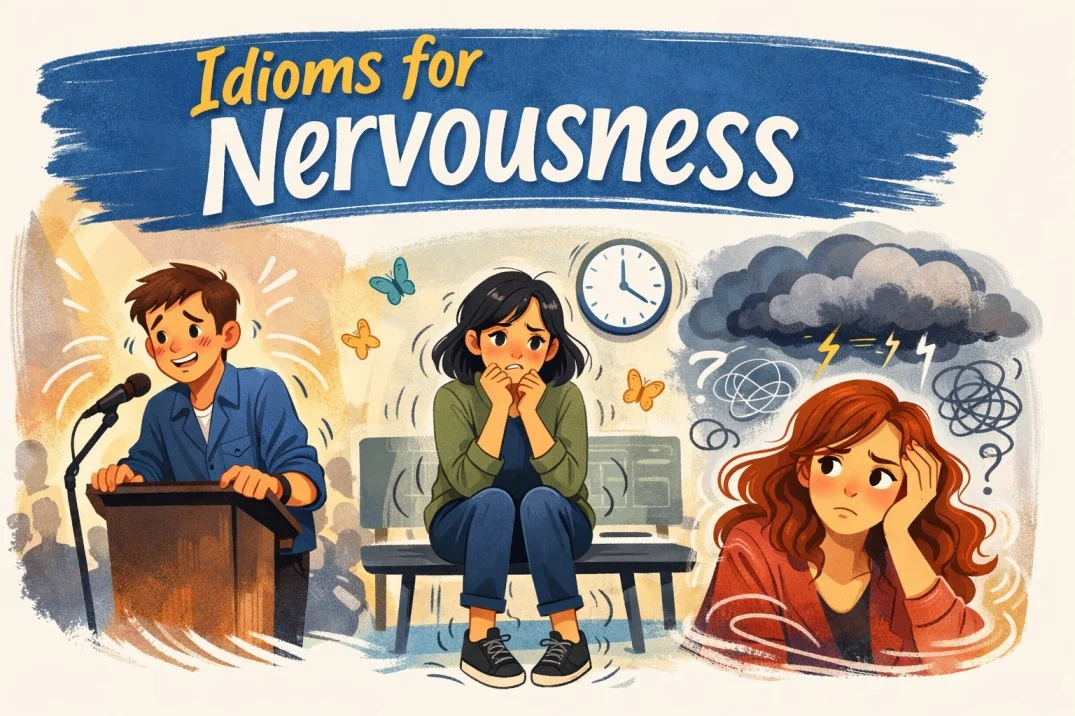
Idioms for nervousness are expressive phrases used to describe feelings of anxiety, fear, tension, or uneasiness in a natural and vivid way.
Examples: butterflies in your stomach, on edge, a bundle of nerves
Feeling nervous is something everyone experiences whether it’s before an exam, during a job interview, or while waiting for an important result. But instead of simply saying “I’m nervous,” English offers a wide range of idioms that express these emotions in a much more vivid and relatable way.
For example, when someone says “I have butterflies in my stomach,” you instantly understand that anxious, fluttery feeling. These idioms don’t just describe nervousness they bring it to life.
Using such expressions makes your communication sound more natural, engaging, and human. It also helps you connect better in conversations, storytelling, and even professional settings when used appropriately.
In this guide, you’ll explore:
- idioms for nervousness
- Their meanings and real-life usage
- Formal, casual, and creative examples
- Practical tips to use them confidently
Let’s explore the most expressive idioms that bring language to life.
Quick Summary Table
| Situation | Idioms |
|---|---|
| Sudden nervousness | Get cold feet, Heart in mouth |
| Extreme anxiety | Bundle of nerves, Jump out of skin |
| Ongoing tension | On edge, Like a cat on hot bricks |
| Controlled nervousness | Keep it together, Hold your nerve |
| Social anxiety | Tongue-tied, Lose your voice |
😰 Idioms for Sudden Nervousness
Sometimes nervousness doesn’t build slowly it hits instantly, right before an important moment or decision. These idioms capture that sudden rush of fear, doubt, or hesitation.
1. Get Cold Feet
This idiom is commonly used when someone suddenly becomes unsure and backs away from a decision they were ready to make.
Meaning: Suddenly feel nervous and unsure
When People Use It: Before big decisions, events, or commitments
Alternative Expression: Lose confidence
Examples:
Formal: He got cold feet before the presentation.
Casual: I almost got cold feet!
Creative: Doubt crept in at the last moment.
2. Heart in Your Mouth
This expression describes a powerful physical reaction to fear or anxiety, where your heartbeat feels overwhelming.
Meaning: Feel extremely anxious or scared
When People Use It: During tense, risky, or suspenseful situations
Alternative Expression: Terrified
Examples:
Formal: She had her heart in her mouth waiting for the results.
Casual: My heart was in my mouth!
Creative: Her heartbeat echoed in her ears.
3. Jump Out of Your Skin
A vivid idiom that reflects a sudden shock or nervous reaction to something unexpected.
Meaning: Be extremely startled or nervous
When People Use It: Sudden fear, loud noises, or unexpected events
Alternative Expression: Get startled
Examples:
Formal: He nearly jumped out of his skin at the noise.
Casual: That scared me so much!
Creative: His body reacted before his mind could.
💡 Usage Insight:
These idioms are best used when nervousness is sudden, intense, and triggered instantly.
😨 Idioms for Extreme Nervousness
Some situations create overwhelming anxiety that takes over both the mind and body.
4. A Bundle of Nerves
This idiom describes someone who is completely overwhelmed by anxiety and unable to stay calm.
Meaning: Extremely nervous
When People Use It: Before important or high-pressure events
Alternative Expression: Very anxious
Examples:
Formal: She was a bundle of nerves before the interview.
Casual: I’m a total bundle of nerves.
Creative: Her thoughts trembled with tension.
5. Have Butterflies in Your Stomach
One of the most common and relatable idioms for nervousness, especially in emotional or exciting situations.
Meaning: Feel nervous in a fluttery way
When People Use It: Exciting, stressful, or emotional moments
Alternative Expression: Feel anxious
Examples:
Formal: He had butterflies in his stomach before speaking.
Casual: I’ve got butterflies!
Creative: Tiny waves of nervous energy fluttered inside him.
6. Shake Like a Leaf
This idiom emphasizes visible physical signs of anxiety, especially trembling.
Meaning: Tremble due to fear or nervousness
When People Use It: Intense nervous situations
Alternative Expression: Tremble
Examples:
Formal: He was shaking like a leaf during the interview.
Casual: I was literally shaking.
Creative: His hands trembled uncontrollably.
💡 Memory Tip:
Link these idioms with physical sensations shaking, fluttering, tension to remember them easily.
😬 Idioms for Ongoing Nervous Tension
Not all anxiety is sudden sometimes it lingers, builds, and stays quietly in the background.
7. On Edge
This idiom reflects a constant state of tension where relaxation feels impossible.
Meaning: Nervous and unable to relax
When People Use It: Stressful or uncertain situations
Alternative Expression: Tense
Examples:
Formal: She felt on edge throughout the day.
Casual: I’m so on edge right now.
Creative: Her mind refused to rest.
8. Like a Cat on Hot Bricks
A colorful expression describing restless, anxious behavior where someone cannot sit still.
Meaning: Extremely restless or nervous
When People Use It: When anxiety causes physical restlessness
Alternative Expression: Restless
Examples:
Formal: He paced like a cat on hot bricks.
Casual: I couldn’t sit still.
Creative: His energy had no place to settle.
9. Sweat Buckets
This idiom highlights how nervousness often shows physically, especially through sweating.
Meaning: Sweat heavily due to stress or anxiety
When People Use It: High-pressure or nerve-wracking situations
Alternative Expression: Extremely nervous
Examples:
Formal: He was sweating buckets before the speech.
Casual: I was sweating like shocking.
Creative: Nervousness showed in every drop of sweat.
😶 Idioms for Controlled Nervousness
In many situations, people try to hide their anxiety and stay calm on the outside.
10. Keep It Together
This phrase reflects the effort to stay emotionally stable despite internal nervousness.
Meaning: Stay calm despite stress or anxiety
When People Use It: Emotional or high-pressure moments
Alternative Expression: Stay composed
Examples:
Formal: She tried to keep it together during the interview.
Casual: Just keep it together.
Creative: She held her emotions tightly in place.
11. Hold Your Nerve
This idiom is about maintaining courage and control even in difficult or stressful situations.
Meaning: Remain calm under pressure
When People Use It: Risky or challenging moments
Alternative Expression: Stay brave
Examples:
Formal: He held his nerve during negotiations.
Casual: Stay strong!
Creative: Courage steadied his trembling thoughts.
12. Play It Cool
Sometimes people hide their nervousness by acting calm and confident.
Meaning: Act calm even if nervous
When People Use It: Social or professional situations
Alternative Expression: Stay relaxed
Examples:
Formal: He played it cool despite his anxiety.
Casual: Just act normal.
Creative: Calmness became his disguise.
💡 Usage Insight:
These idioms are especially useful in professional and social settings, where showing nervousness openly isn’t ideal.
⚡ Idioms for Nervous Reactions & Behavior
Nervousness often affects how people speak, react, and behave.
13. Tongue-Tied
This idiom describes the moment when nervousness makes it difficult to speak.
Meaning: Unable to speak due to anxiety
When People Use It: Social pressure or important conversations
Alternative Expression: Speechless
Examples:
Formal: He became tongue-tied during the interview.
Casual: I couldn’t say anything.
Creative: Words disappeared when he needed them most.
14. Lose Your Voice
Anxiety can sometimes make speaking feel physically impossible.
Meaning: Be unable to speak due to fear or nervousness
Alternative Expression: Freeze up
Examples:
Formal: She almost lost her voice during the presentation.
Casual: I froze completely.
Creative: Her voice faded into silence.
15. Trip Over Your Words
This idiom shows how nervousness disrupts clear communication.
Meaning: Speak poorly due to nervousness
Alternative Expression: Stumble while speaking
Examples:
Formal: He tripped over his words in the meeting.
Casual: I messed up my words.
Creative: His sentences fell apart mid-air.
💥 Idioms for Extreme Fear & Panic
When nervousness intensifies, it can turn into fear that affects both mind and body.
16. Scared Stiff
This idiom describes a state of complete fear where movement or reaction feels impossible.
Meaning: Extremely frightened
Alternative Expression: Terrified
Examples:
Formal: She was scared stiff before going on stage.
Casual: I was so scared.
Creative: Fear froze her in place.
17. Jump at Every Sound
This idiom reflects heightened sensitivity caused by anxiety.
Meaning: Easily startled due to nervousness
Alternative Expression: Very jumpy
Examples:
Formal: He jumped at every sound.
Casual: Everything scared me.
Creative: Even silence felt loud.
18. Break Out in a Cold Sweat
A strong physical reaction that clearly shows fear or anxiety.
Meaning: Sweat suddenly due to nervousness
Alternative Expression: Panic physically
Examples:
Formal: He broke out in a cold sweat.
Casual: I started sweating instantly.
Creative: Fear surfaced through his skin.
🌊 Idioms for Lingering Nervousness
Sometimes anxiety stays quietly in the background and doesn’t fade quickly.
19. Have a Knot in Your Stomach
This idiom reflects deep, ongoing tension that sits within you.
Meaning: Feel constant nervous anxiety
Alternative Expression: Feel uneasy
Examples:
Formal: She had a knot in her stomach all day.
Casual: I feel weird inside.
Creative: Tension tightened within her.
20. Feel Uneasy
A simple yet powerful expression for mild discomfort or nervousness.
Meaning: Slightly nervous or uncomfortable
Alternative Expression: Uncomfortable
Examples:
Formal: He felt uneasy about the situation.
Casual: Something feels off.
Creative: Doubt lingered quietly.
21. Have the Jitters
A casual idiom often used for nervous excitement or mild anxiety.
Meaning: Feel nervous or anxious
Alternative Expression: Feel shaky
Examples:
Formal: She had the jitters before the test.
Casual: I’m feeling jittery.
Creative: Nervous energy ran through her.
🚨 Idioms for Risky or Pressure Situations
These idioms describe nervousness caused by high stakes, expectations, or pressure.
22. Under Pressure
A widely used phrase for situations involving stress and responsibility.
Meaning: Feeling stressed due to expectations
Alternative Expression: Stressed
Examples:
Formal: He performed well under pressure.
Casual: I’m under so much pressure.
Creative: Expectations weighed heavily on him.
23. Crack Under Pressure
This idiom highlights the inability to handle stress successfully.
Meaning: Fail due to stress or nervousness
Alternative Expression: Break down
Examples:
Formal: He cracked under pressure.
Casual: I couldn’t handle it.
Creative: The pressure became too much to bear.
24. Feel the Heat
When pressure builds, this idiom captures the rising intensity of stress.
Meaning: Experience increasing stress
Alternative Expression: Face pressure
Examples:
Formal: He began to feel the heat.
Casual: I’m feeling the pressure.
Creative: The tension grew stronger around him.
25. Walk on Eggshells
A powerful idiom describing careful, anxious behavior in sensitive situations.
Meaning: Act very carefully to avoid conflict
Alternative Expression: Be cautious
Examples:
Formal: She walked on eggshells around her boss.
Casual: I have to be super careful.
Creative: Every step felt fragile and uncertain.
💡 Final Insight:
Nervousness-related idioms often connect with physical sensations, emotional reactions, and mental pressure, making them easy to understand and powerful in communication.
Creative: Every step felt fragile and uncertain.
How to Use Idioms for Nervousness Naturally
✔ Use in Conversations
Instead of: I’m nervous
Say: I’ve got butterflies in my stomach
✔ Match the Situation
- Casual → “I’m freaking out”
- Formal → “He appeared quite anxious”
✔ Don’t Overuse
Use 1–2 idioms per conversation for natural flow
Common Mistakes to Avoid
- ❌ Using idioms in highly formal documents
- ❌ Mixing idioms incorrectly
- ❌ Using without understanding tone
Practice Method
- Learn 3 idioms daily
- Use them in sentences
- Apply them in real conversations
FAQs
1. What are idioms for nervousness?
They are expressions used to describe anxiety and tension naturally.
2. Are they formal or informal?
Mostly informal but usable in semi-formal speech.
3. Can I use them daily?
Yes, especially in conversations and storytelling.
4. How can I remember them?
Connect them with feelings and real situations.
5. Why should I learn them?
They make your English more natural and expressive.
Conclusion
Nervousness is a universal emotion but the way you express it can make all the difference. Instead of simply saying “I’m nervous,” idioms allow you to describe your feelings with depth, creativity, and clarity.
Whether you’re on edge, trying to keep it together, or feeling butterflies in your stomach, these expressions help you communicate more naturally and confidently.
The key is simple: practice and use them in real life. Start with a few idioms, apply them in conversations, and gradually build your fluency.
Because in the end, language isn’t just about words it’s about expressing what you truly feel.
Read More Related Articles:
- Idioms for Snow | Adds Frosty Charm to Your Language In 2026
- Idioms for Shock | Expressions to Capture Surprise and Emotion In 2026
- Idioms for Speed | Fast-Paced Expressions to Energize Your English In 2026

Tyler Zone is an American writer at IdiomCrafter.com, who enjoys exploring the meaning behind everyday phrases. He focuses on making idioms simple and relatable for readers of all backgrounds. In his free time, he likes discovering new expressions and how people use them in daily life.