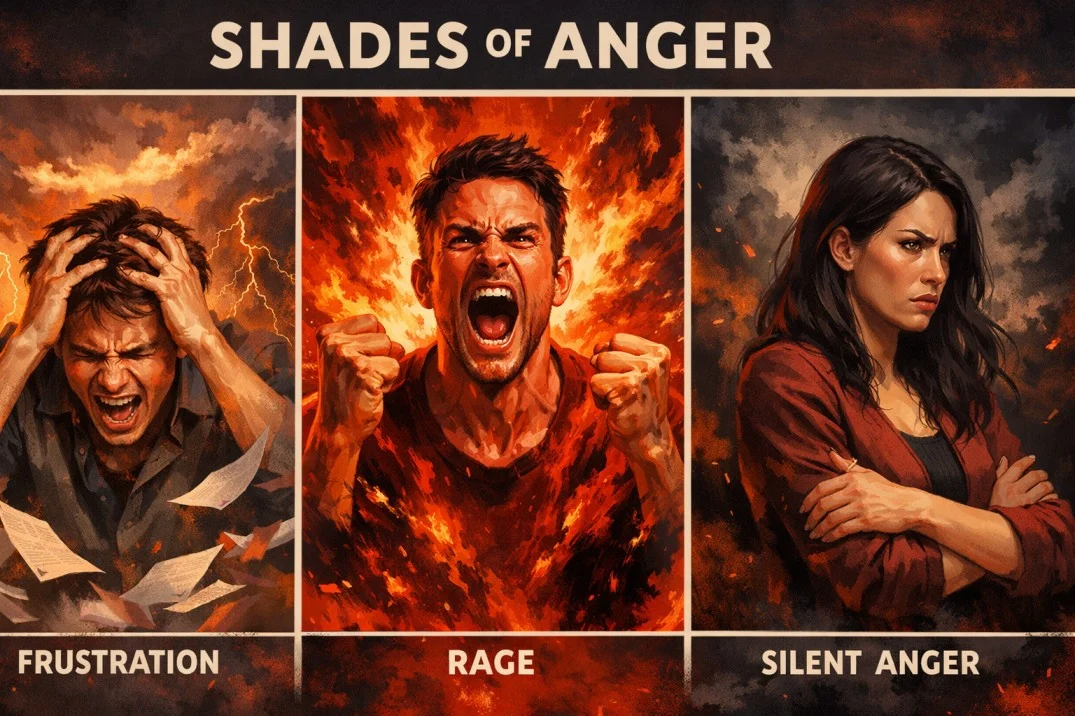
Quick Answer
Idioms for anger are expressive phrases used to describe feelings like frustration, rage, irritation, or losing control making your communication more vivid and natural.
Examples: blow your top, see red, hit the roof
Anger is one of the most powerful human emotions and language has developed equally powerful ways to express it. Instead of simply saying “I’m angry,” English offers a wide range of idioms for anger that make your expression more vivid, relatable, and impactful.
Think about it: when someone says “he blew his top” or “she was seeing red,” you instantly understand the intensity of the emotion. These idioms don’t just describe anger they paint a picture of it.
In daily life, whether you’re talking about workplace frustration, personal conflicts, or storytelling, using idioms can make your communication feel more natural and engaging. But the key is knowing when and how to use them correctly.
In this guide, you’ll explore:
- 25+ powerful idioms for anger
- Their meanings and real-life usage
- Formal, casual, and creative examples
- Practical tips to use them naturally
Let’s explore the most expressive idioms that bring language to life.
Quick Summary Table
| Situation | Idiom Examples |
|---|---|
| Sudden anger | Blow your top, Hit the roof |
| Extreme rage | See red, Fly into a rage |
| Controlled anger | Bite your tongue, Keep your cool |
| Growing frustration | Boil with anger, Get worked up |
| Conflict situations | At each other’s throats, Lose your temper |
🔥 Idioms for Sudden Anger
Sometimes anger doesn’t give you a warning it hits instantly, intense and uncontrollable.
1. Blow Your Top
This idiom perfectly captures a moment when emotions suddenly explode without control.
Meaning: Suddenly become very angry
When People Use It: During unexpected emotional outbursts
Alternative Expression: Lose control
Examples:
Formal: He blew his top during the meeting.
Casual: Dad totally blew his top yesterday.
Creative: His anger erupted like a volcano.
2. Hit the Roof
When anger rises instantly, it often feels like it shoots upward with force.
Meaning: Become extremely angry
When People Use It: Reaction to shocking or upsetting news
Alternative Expression: Get furious
Examples:
Formal: She hit the roof upon hearing the decision.
Casual: Mom will hit the roof if she finds out.
Creative: Her anger shot upward like a rocket.
3. Fly Off the Handle
This expression describes anger that appears quickly, often without much thought or control.
Meaning: React angrily without thinking
When People Use It: When someone overreacts impulsively
Alternative Expression: Lose temper quickly
Examples:
Formal: He tends to fly off the handle in stressful situations.
Casual: Why are you flying off the handle?
Creative: His emotions slipped out of control instantly.
💡 Usage Insight: These idioms are ideal when anger appears suddenly and intensely, often catching others off guard.
😡 Idioms for Extreme Rage
Some emotions go beyond simple anger they become overwhelming, intense, and impossible to ignore.
4. See Red
This powerful idiom reflects a moment when anger becomes so strong that it dominates your thoughts completely.
Meaning: Become extremely angry
When People Use It: During intense emotional reactions
Alternative Expression: Rage
Examples:
Formal: He saw red when he was insulted.
Casual: I just saw red, honestly.
Creative: The world blurred into a storm of red.
5. Fly into a Rage
Sometimes anger doesn’t build slowly it arrives all at once, like a sudden storm.
Meaning: Suddenly become extremely angry
When People Use It: When someone reacts instantly with intense anger
Alternative Expression: Explode with anger
Examples:
Formal: She flew into a rage over the mistake.
Casual: He just flew into a rage.
Creative: His calm shattered into fury.
6. Foam at the Mouth
This idiom paints a vivid picture of anger reaching an uncontrollable level.
Meaning: Be extremely angry
When People Use It: When someone is visibly furious and overwhelmed
Alternative Expression: Furious
Examples:
Formal: He was foaming at the mouth with anger.
Casual: She was practically foaming.
Creative: His anger bubbled uncontrollably.
💡 Memory Tip: Think of physical reactions heat, tension, and intensity to remember these idioms more effectively.
😤 Idioms for Growing Frustration
Not all anger explodes instantly sometimes it builds quietly before reaching the surface.
7. Boil with Anger
This idiom captures the feeling of anger slowly heating up inside you.
Meaning: Feel anger building up internally
When People Use It: When emotions are intense but not yet expressed
Alternative Expression: Burn with anger
Examples:
Formal: He was boiling with anger after the decision.
Casual: I’m boiling right now.
Creative: His emotions simmered beneath the surface.
8. Get Worked Up
Sometimes small issues gradually turn into strong emotional reactions.
Meaning: Become upset or angry gradually
When People Use It: When emotions increase over time
Alternative Expression: Become emotional
Examples:
Formal: She got worked up over the issue.
Casual: Don’t get so worked up.
Creative: His calm slowly unraveled.
9. Hot Under the Collar
A classic expression that describes visible irritation or discomfort.
Meaning: Become irritated or slightly angry
When People Use It: In tense or uncomfortable situations
Alternative Expression: Annoyed
Examples:
Formal: He became hot under the collar during the debate.
Casual: Why are you so hot under the collar?
Creative: His irritation rose like heat beneath the surface.
😶 Idioms for Controlled Anger
In many situations, showing anger openly isn’t an option so people learn to control it.
10. Bite Your Tongue
This idiom reflects the effort it takes to stop yourself from speaking in anger.
Meaning: Hold back from expressing anger
When People Use It: To avoid conflict or maintain professionalism
Alternative Expression: Hold back
Examples:
Formal: She bit her tongue to avoid conflict.
Casual: I had to bite my tongue.
Creative: Words stayed locked behind restraint.
11. Keep Your Cool
Staying calm when emotions run high is a valuable skill.
Meaning: Remain calm despite anger
When People Use It: In stressful or heated situations
Alternative Expression: Stay calm
Examples:
Formal: He managed to keep his cool under pressure.
Casual: Just keep your cool.
Creative: He stood calm in the middle of the storm.
12. Swallow Your Anger
Sometimes emotions are felt deeply but never expressed outwardly.
Meaning: Suppress or hide anger
When People Use It: When expressing anger isn’t appropriate
Alternative Expression: Hold in feelings
Examples:
Formal: She swallowed her anger during the meeting.
Casual: I just swallowed it.
Creative: Her emotions sank silently beneath the surface.
💡 Usage Insight: These idioms are especially useful in professional environments, where controlling emotions is often necessary.
⚔️ Idioms for Conflict & Arguments
When anger is shared between people, it often leads to conflict and confrontation.
13. At Each Other’s Throats
This phrase vividly describes intense and ongoing arguments.
Meaning: Constantly arguing in an aggressive way
When People Use It: In heated conflicts or toxic situations
Alternative Expression: Fighting constantly
Examples:
Formal: The team members were at each other’s throats.
Casual: They’re always fighting.
Creative: Their words clashed like sharp blades.
14. Lose Your Temper
A common expression for when self-control slips away.
Meaning: Fail to control your anger
When People Use It: During emotional outbursts
Alternative Expression: Get angry
Examples:
Formal: He lost his temper during the discussion.
Casual: I completely lost it.
Creative: Control slipped through his fingers like sand.
15. Have a Short Fuse
Some people react quickly, even to small triggers.
Meaning: Become angry very easily
When People Use It: To describe someone with low patience
Alternative Expression: Easily irritated
Examples:
Formal: He has a short fuse in stressful situations.
Casual: She gets mad really fast.
Creative: His patience burned out in seconds.
💥 Idioms for Explosive Anger
These idioms describe anger that bursts out suddenly and powerfully.
16. Blow a Gasket
This expression suggests pressure building until it finally bursts.
Meaning: Suddenly become very angry
When People Use It: When someone loses control unexpectedly
Alternative Expression: Explode
Examples:
Formal: He blew a gasket after hearing the news.
Casual: Dad’s gonna blow a gasket.
Creative: The pressure burst without warning.
17. Go Ballistic
An intense idiom used for extreme, uncontrollable anger.
Meaning: Become extremely angry
When People Use It: When reactions are dramatic and overwhelming
Alternative Expression: Lose control
Examples:
Formal: He went ballistic during the argument.
Casual: She went out of control.
Creative: His anger shot beyond control.
18. Hit the Ceiling
A dramatic way to describe anger rising instantly.
Meaning: Become extremely angry
When People Use It: In shocking or frustrating situations
Alternative Expression: Explode with anger
Examples:
Formal: She hit the ceiling when she heard the news.
Casual: He totally flipped out.
Creative: His anger rose beyond all limits.
🌊 Idioms for Lingering or Silent Anger
Not all anger fades quickly sometimes it stays quietly beneath the surface.
19. Harbor a Grudge
This idiom reflects long-term emotional resentment.
Meaning: Hold onto anger for a long time
When People Use It: In unresolved conflicts
Alternative Expression: Hold resentment
Examples:
Formal: He harbored a grudge for years.
Casual: She’s still mad about it.
Creative: His anger remained anchored deep within.
20. Give Someone the Cold Shoulder
Ignoring someone can often be a sign of hidden anger.
Meaning: Show anger by ignoring someone
When People Use It: In passive-aggressive situations
Alternative Expression: Ignore deliberately
Examples:
Formal: She gave him the cold shoulder.
Casual: He just ignored me.
Creative: Silence replaced every word between them.
21. Stew in Anger
Some anger doesn’t explode it lingers and grows internally.
Meaning: Stay angry for a long time
When People Use It: When someone holds onto frustration
Alternative Expression: Stay upset
Examples:
Formal: He stewed in anger after the incident.
Casual: I stayed mad all day.
Creative: His emotions simmered endlessly within.
🚨 Idioms for Risky Anger Behavior
These idioms describe situations where anger escalates or is triggered deliberately.
22. Add Fuel to the Fire
This idiom highlights how anger can intensify quickly.
Meaning: Make a situation worse by increasing anger
When People Use It: When someone worsens a conflict
Alternative Expression: Escalate
Examples:
Formal: His comments added fuel to the fire.
Casual: Don’t make it worse.
Creative: The flames grew stronger with every word.
23. Rub Someone the Wrong Way
Sometimes small actions can trigger irritation without obvious reason.
Meaning: Annoy or irritate someone
When People Use It: In subtle emotional reactions
Alternative Expression: Bother
Examples:
Formal: His tone rubbed her the wrong way.
Casual: That really annoyed me.
Creative: Something about him felt instantly off.
24. Push Someone’s Buttons
This idiom is often used when anger is intentionally triggered.
Meaning: Provoke someone deliberately
When People Use It: When someone knows how to irritate others
Alternative Expression: Trigger
Examples:
Formal: He pushed her buttons during the meeting.
Casual: Stop triggering me.
Creative: He knew exactly what would spark her anger.
25. Cross the Line
There are moments when behavior goes too far and causes anger instantly.
Meaning: Go beyond acceptable limits
When People Use It: When boundaries are violated
Alternative Expression: Overstep
Examples:
Formal: He crossed the line with his remarks.
Casual: That was too much.
Creative: Boundaries shattered in a single moment.
How to Use Idioms for Anger Naturally
✔ Use in Conversations
Instead of: I’m very angry
Say: I almost blew my top
✔ Match Context
- Casual → “He flipped out”
- Formal → “He lost his temper”
✔ Don’t Overuse
Too many idioms can sound unnatural
Common Mistakes to Avoid
- ❌ Using idioms in very formal writing
- ❌ Mixing idioms incorrectly
- ❌ Using without understanding tone
Practice Method
- Pick 3 idioms daily
- Use them in sentences
- Try them in real conversation
FAQs
1. What are idioms for anger?
They are expressions used to describe anger in a vivid and natural way.
2. Are anger idioms formal or informal?
Mostly informal, but some can be used in semi-formal contexts.
3. Can I use them in writing?
Yes, especially in blogs, storytelling, and conversations.
4. How can I remember them easily?
Use them in daily speech and connect them with emotions.
5. Why are idioms important?
They make your English more natural and expressive.
Conclusion
Idioms for anger give you the power to express emotions far beyond simple words. Instead of repeating “I’m angry,” you can describe your feelings with depth, creativity, and precision whether you’re boiling with anger, trying to keep your cool, or about to blow your top.
The real key is not just memorizing these idioms, but using them naturally in your daily life. Start small pick a few, practice them in conversations, and gradually build your confidence.
Over time, you’ll notice something powerful: your communication becomes more engaging, more expressive, and more human.
And that’s the real goal of language not just to speak, but to connect and be understood.
Read More Related Articles:
- Idioms for Stress | Powerful Expressions to Describe Pressure Naturally In 2026
- Idioms for School |Speak Smarter in Class & Beyond In 2026
- Idioms for Sea | Ocean-Inspired Expressions to Deepen Your Language In 2026

Urban Hunter is an American writer at IdiomCrafter.com, with a keen interest in how language shapes everyday conversations. She enjoys turning common expressions into engaging and easy-to-follow reads. Outside of writing, she spends time exploring new words and their hidden meanings.