Quick Answer:
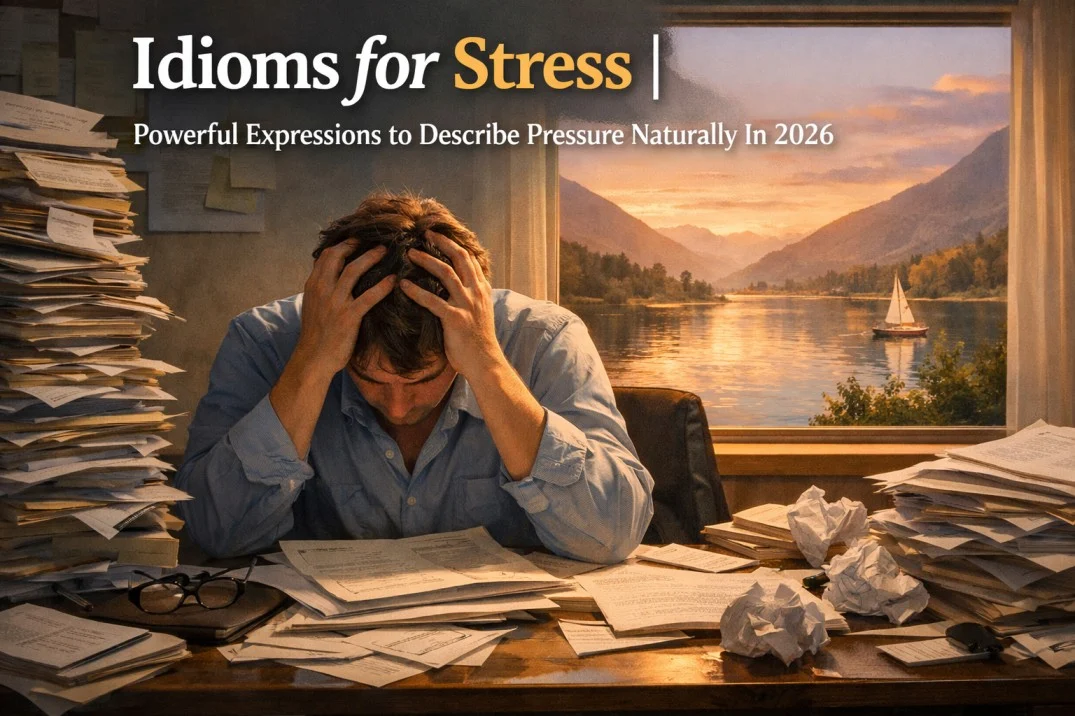
Idioms for stress are expressive phrases used to describe pressure, anxiety, or overwhelming situations in a vivid and relatable way.
They help you communicate emotions more naturally and make your speech and writing feel more human.
Stress is something we all experience but describing it clearly isn’t always easy.
You might say “I’m stressed,” but that barely scratches the surface of what you’re feeling. Is it pressure from work? Emotional overwhelm? Mental exhaustion? This is where idioms step in and do something powerful they give shape to those feelings.
In everyday conversations, especially in English-speaking environments, people rarely stick to plain language when talking about stress. Instead, they say things like “I’m at my breaking point” or “I’ve got too much on my plate.” These expressions don’t just communicate stress they show it.
For students writing essays, professionals navigating workplace communication, or anyone trying to sound more fluent, learning idioms for stress can make a noticeable difference. They add depth, emotion, and relatability to your language.
In this guide, you’ll explore over 25 carefully selected idioms for stress, along with real-life examples and practical usage tips. By the end, you won’t just understand these expressions you’ll be able to use them naturally in your own conversations and writing.
Let’s explore the most expressive idioms that bring stress to life.
Quick Overview Table
| Idiom | Meaning | Tone |
|---|---|---|
| Under pressure | Feeling stressed | Neutral |
| At breaking point | Extremely stressed | Strong |
| Snowed under | Overwhelmed with work | Informal |
| On edge | Nervous or tense | Emotional |
| Burn the candle at both ends | Overworking | Informal |
| At wit’s end | Mentally exhausted | Expressive |
| Have too much on your plate | Overloaded | Common |
| Running on empty | No energy left | Emotional |
Main Idioms Section
1. Under Pressure
Meaning: Experiencing stress due to demands
When People Use It: Work, exams, responsibilities
Alternative Expression: Feeling stressed
Examples:
- Formal: She is currently under pressure to meet deadlines.
- Casual: I’ve been under so much pressure lately.
- Creative: Expectations pressed down like invisible weight.
2. At Breaking Point
Meaning: Unable to handle stress anymore
When People Use It: Emotional exhaustion
Alternative Expression: On the verge
Examples:
- Formal: He reached his breaking point after weeks of strain.
- Casual: I’m at my breaking point.
- Creative: One more push and everything would collapse.
3. Snowed Under
Meaning: Overwhelmed with tasks
When People Use It: Busy schedules
Alternative Expression: Swamped
Examples:
- Formal: I am snowed under with work.
- Casual: I’m totally snowed under.
- Creative: Responsibilities piled endlessly.
4. On Edge
Meaning: Nervous and tense
When People Use It: Anxiety situations
Alternative Expression: Tense
Examples:
- Formal: She appeared on edge during the meeting.
- Casual: I feel so on edge today.
- Creative: Every sound felt sharper than usual.
5. Burn the Candle at Both Ends
Meaning: Overworking without rest
When People Use It: Busy lifestyle
Alternative Expression: Overwork
Examples:
- Formal: He has been burning the candle at both ends.
- Casual: I’ve been working nonstop.
- Creative: Days and nights blurred into one.
6. At Wit’s End
Meaning: Mentally exhausted and confused
When People Use It: Problem-solving stress
Alternative Expression: Out of ideas
Examples:
- Formal: She was at her wit’s end.
- Casual: I don’t know what to do anymore.
- Creative: Thoughts ran out of direction.
7. Have Too Much on Your Plate
Meaning: Too many responsibilities
When People Use It: Work or personal life
Alternative Expression: Overloaded
Examples:
- Formal: He has too much on his plate currently.
- Casual: I’ve got too much going on.
- Creative: Tasks filled every corner of time.
8. Running on Empty
Meaning: No energy left
When People Use It: Physical or emotional exhaustion
Alternative Expression: Drained
Examples:
- Formal: She was running on empty.
- Casual: I’m exhausted.
- Creative: Energy faded like a dying light.
9. In Over Your Head
Meaning: Dealing with something too difficult
Alternative Expression: Overwhelmed
Examples:
- Formal: He felt in over his head.
- Casual: This is too much for me.
- Creative: The situation rose beyond reach.
10. Keep Your Head Above Water
Meaning: Just managing to cope
Alternative Expression: Surviving
Examples:
- Formal: She is managing to keep her head above water.
- Casual: I’m barely coping.
- Creative: Survival became the only goal.
11. Lose Sleep Over Something
Meaning: Worry excessively
Alternative Expression: Stress about
Examples:
- Formal: He lost sleep over the issue.
- Casual: I couldn’t sleep thinking about it.
- Creative: Nights turned restless and heavy.
12. Drive Someone Up the Wall
Meaning: Cause extreme frustration
Alternative Expression: Annoy deeply
Examples:
- Formal: The situation drove him up the wall.
- Casual: This is driving me crazy.
- Creative: Patience cracked under pressure.
13. Bite Off More Than You Can Chew
Meaning: Take on too much
Alternative Expression: Overcommit
Examples:
- Formal: He bit off more than he could chew.
- Casual: I took on too much.
- Creative: Ambition stretched beyond limits.
14. Pull Your Hair Out
Meaning: Feel extreme frustration
Alternative Expression: Get stressed
Examples:
- Formal: The delays made her extremely frustrated.
- Casual: I’m pulling my hair out here!
- Creative: Stress tangled every thought.
15. At Your Limit
Meaning: Maximum capacity reached
Alternative Expression: Maxed out
Examples:
- Formal: She is at her limit.
- Casual: I can’t take more.
- Creative: Boundaries blurred and broke.
16. Feel the Heat
Meaning: Experience pressure
Alternative Expression: Under pressure
Examples:
- Formal: He began to feel the heat.
- Casual: I’m feeling the pressure.
- Creative: Expectations burned intensely.
17. Crack Under Pressure
Meaning: Fail due to stress
Alternative Expression: Break down
Examples:
- Formal: He cracked under pressure.
- Casual: I just couldn’t handle it.
- Creative: Strength gave way quietly.
18. Go to Pieces
Meaning: Lose emotional control
Alternative Expression: Break down
Examples:
- Formal: She went to pieces during the crisis.
- Casual: I fell apart.
- Creative: Emotions scattered like glass.
19. Push Someone to the Edge
Meaning: Cause extreme stress
Alternative Expression: Overwhelm
Examples:
- Formal: The workload pushed him to the edge.
- Casual: This is too much.
- Creative: Pressure built relentlessly.
20. On the Brink
Meaning: Close to breakdown
Alternative Expression: Nearly collapsing
Examples:
- Formal: He was on the brink of exhaustion.
- Casual: I’m about to lose it.
- Creative: Balance hung by a thread.
21. Carry the Weight of the World
Meaning: Feel heavily burdened
Alternative Expression: Overburdened
Examples:
- Formal: She felt the weight of responsibility.
- Casual: Everything’s on me.
- Creative: The world rested heavily on her shoulders.
22. Spread Too Thin
Meaning: Doing too many things at once
Alternative Expression: Overextended
Examples:
- Formal: He is spread too thin across projects.
- Casual: I’m doing too much.
- Creative: Energy stretched in every direction.
23. Under the Gun
Meaning: Under intense pressure
Alternative Expression: Rushed
Examples:
- Formal: The team is under the gun.
- Casual: We’re rushed.
- Creative: Time pressed tightly.
24. Stress Yourself Out
Meaning: Cause your own stress
Alternative Expression: Overthink
Examples:
- Formal: He tends to stress himself out.
- Casual: I overthink everything.
- Creative: Thoughts spiraled endlessly.
25. On a Tight Leash
Meaning: Restricted and pressured
Alternative Expression: Controlled
Examples:
- Formal: He worked under strict conditions.
- Casual: I feel restricted.
- Creative: Freedom felt limited and tense.
Practical Usage Guidance
How to Use Idioms Naturally
Start by using idioms that match your real emotions. If you’re overwhelmed, saying “I have too much on my plate” feels more natural than forcing complex expressions.
Use idioms in conversations first writing becomes easier afterward.
Common Mistakes with Idioms
Avoid overusing them. Too many idioms in one sentence can feel unnatural. Also, be mindful of tone some idioms may sound dramatic in formal writing.
Idioms vs Literal Expressions
Literal: “I am stressed.”
Idiomatic: “I’m at my breaking point.”
The second feels more expressive and relatable.
Tips for Sounding More Fluent
- Learn idioms in context
- Practice speaking them
- Listen to real conversations
- Use them gradually
How to Remember Idioms Easily
Associate idioms with personal experiences. If you’ve ever felt overwhelmed, connect that feeling to “snowed under” or “too much on your plate.”
FAQs
1. What are idioms for stress?
They are expressions used to describe pressure or emotional strain figuratively.
2. Are these idioms common in daily English?
Yes, many are widely used in conversations and workplaces.
3. Can I use them in formal writing?
Some are suitable, but many are better for informal contexts.
4. How can I learn idioms faster?
Practice them in real-life conversations and writing.
5. Why are idioms important?
They make your language more natural and expressive.
Conclusion
Idioms for stress do something simple but powerful they turn invisible feelings into clear, relatable language.
Instead of repeating “I’m stressed,” you gain dozens of ways to express nuance: pressure, exhaustion, frustration, and emotional overload. These expressions don’t just improve your English they make your communication feel real.
The key is consistency. Pick a few idioms, use them in your daily life, and build from there. Over time, they’ll become second nature.
And when they do, you won’t just sound fluent you’ll sound natural, confident, and genuinely expressive.

Tyler Zone is an American writer at IdiomCrafter.com, who enjoys exploring the meaning behind everyday phrases. He focuses on making idioms simple and relatable for readers of all backgrounds. In his free time, he likes discovering new expressions and how people use them in daily life.