Quick Answer
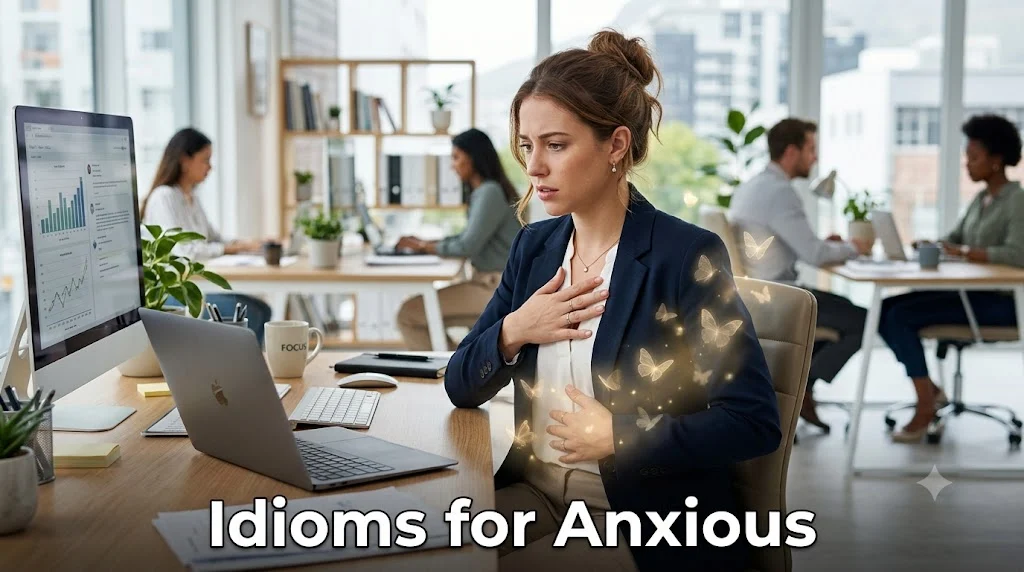
Idioms for “anxious” are vivid expressions used to describe feelings of worry, nervousness, unease, and fear in a more colorful and relatable way.Examples include: have butterflies in your stomach, be on tenterhooks, and be a bundle of nerves.
Anxiety is a universal human experience, yet it manifests in countless shades and intensities. Sometimes it’s a quiet, nagging worry that you can’t quite shake. Other times, it’s a full-blown, gut-wrenching panic that grips you before a big event. In our daily conversations, we often default to saying “I’m nervous” or “I’m stressed,” but English offers a far richer palette of idioms to paint a more accurate and expressive picture of what we’re feeling.
Instead of simply stating your anxiety, using an idiom can vividly communicate its source, its intensity, and its physical or emotional impact. When you say, “I’m a bag of nerves before my presentation,” or “I’ve been walking on eggshells all day,” the listener immediately understands not just that you are anxious, but the specific quality of that anxiety.
In this guide, you’ll learn:
- The most powerful idioms for anxiety and nervousness.
- The real meanings and ideal situations for each idiom.
- How to use them in formal, casual, and creative contexts.
- Tips for speaking and writing like a native English speaker.
Let’s explore the best idioms for capturing that feeling of being worried, stressed, and anxious.
Quick Summary Table
| Situation | Idioms |
|---|---|
| General Nervousness | Have butterflies in your stomach, Have ants in your pants |
| Extreme Worry & Stress | Be a bundle of nerves, Be a nervous wreck, Be at your wits’ end |
| Anticipating Trouble | Wait for the other shoe to drop, Be on pins and needles |
| Fear & Dread | Break out in a cold sweat, Make your blood run cold |
| Behaving Cautiously | Walk on eggshells, Be on tenterhooks |
| Overthinking & Stress | Stew over something, Sweat over something |
| The Cause of Anxiety | A recipe for disaster, Make your hair stand on end |
🥶 Idioms for General Nervousness
These are the most common and widely used idioms to describe that fluttery, unsettled feeling we all get from time to time.
1. Have Butterflies in Your Stomach
This is perhaps the most universally recognized idiom for nervousness. It perfectly captures the physical sensation of anxiety.
- Meaning: To feel a nervous or excited feeling in your stomach, often before a significant event.
- When People Use It: Before a presentation, a date, an exam, or any important occasion.
- Alternative Expression: Feel jittery.
Examples:
- Formal: “Despite her years of experience, she admitted to having butterflies in her stomach before the keynote speech.”
- Casual: “I’ve got major butterflies for my driving test tomorrow!”
- Creative: “As the curtains rose, a thousand tiny butterflies took flight in his stomach, each one fluttering with frantic energy.”
2. Have Ants in Your Pants
This idiom is slightly more playful and describes restlessness rather than pure nervousness, often linked to impatience.
- Meaning: To be restless, fidgety, and unable to sit still due to excitement, nervousness, or impatience.
- When People Use It: Often used with children who are excited, but also for adults who are anxiously waiting for news or an event.
- Alternative Expression: Be fidgety.
Examples:
- Formal: “The children seemed to have ants in their pants as they waited for the program to begin.”
- Casual: “I’ve got ants in my pants waiting for the concert to start!”
- Creative: “The anticipation was so high that he felt like he had ants in his pants, his legs bouncing involuntarily as he watched the clock.”
3. Feel Jittery
This idiom focuses on the physical symptoms of nervousness, like trembling or shaking.
- Meaning: To feel nervous and anxious, often resulting in physical shaking.
- When People Use It: The feeling before a stressful event, or after consuming too much caffeine.
- Alternative Expression: Feel shaky.
Examples:
- Formal: “He felt jittery about the upcoming merger and its potential impact on his team.”
- Casual: “I’m so jittery about the interview that I can’t even hold my coffee steady.”
- Creative: “A jittery energy coursed through her veins, making her fingers tap an erratic rhythm on the table.”
😰 Idioms for Extreme Worry & Stress
When nervousness escalates into full-blown, overwhelming stress, these idioms are perfect for describing that state.
4. Be a Bundle of Nerves
This idiom paints a picture of a person who is completely overcome by anxiety, their composure shattered.
- Meaning: To be extremely nervous or anxious, unable to relax.
- When People Use It: Right before a major life event like a wedding, a job interview, or an operation.
- Alternative Expression: Be a wreck.
Examples:
- Formal: “The candidate was a bundle of nerves during the final round of the panel interview.”
- Casual: “She was a total bundle of nerves before the wedding.”
- Creative: “He was a bundle of raw nerves, his anxiety so palpable it seemed to hum in the air around him.”
5. Be a Nervous Wreck
This is a step up from a “bundle of nerves.” It suggests that the anxiety has caused a near-complete loss of control.
- Meaning: To be in a state of extreme anxiety and distress, to the point of being unable to function properly.
- When People Use It: During or after a highly traumatic or stressful event.
- Alternative Expression: Be a mess.
Examples:
- Formal: “The constant pressure of his new role was turning him into a nervous wreck.”
- Casual: “I was a nervous wreck waiting for the test results.”
- Creative: “By the time the ambulance arrived, she was a nervous wreck, her hands trembling and her voice reduced to a whisper.”
6. Be at Your Wits’ End
This idiom moves beyond simple worry and into the realm of frustration and exhaustion. It’s what you feel when you’ve tried everything to solve a problem and nothing works.
- Meaning: To be so worried, confused, or frustrated by a problem that you don’t know what to do next.
- When People Use It: Dealing with persistent problems, like a crying baby, a complex work issue, or a stubborn illness.
- Alternative Expression: Be out of ideas.
Examples:
- Formal: “After weeks of sleepless nights and no solution in sight, the project manager was at his wits’ end.”
- Casual: “I’m at my wits’ end trying to get this computer to work.”
- Creative: “The endless, deafening silence from the other side of the door drove him to his wits’ end, leaving him feeling utterly powerless.”
🕵️ Idioms for Anticipating Trouble
These idioms are used when you are expecting something bad to happen and are in a state of high alert and anxiety.
7. Wait for the Other Shoe to Drop
This is a fantastic idiom to describe a state of anxious anticipation. It suggests that the first bad thing has already happened, and you’re just waiting for the inevitable second.
- Meaning: To wait for an inevitable and often unpleasant event to happen.
- When People Use It: In a tense situation where you know bad news is coming, or after a minor incident that precedes a larger one.
- Alternative Expression: Await the inevitable.
Examples:
- Formal: “After the CEO’s sudden resignation, the entire company was waiting for the other shoe to drop.”
- Casual: “He lost his job, and now we’re just waiting for the other shoe to drop with the house payments.”
- Creative: “The ominous silence after the argument was the worst part; everyone was just waiting for the other shoe to drop.”
8. Be on Pins and Needles
This idiom describes the physical sensation of anxiety—like tiny pricks of discomfort—that you feel when you are intensely waiting for something.
- Meaning: To be very anxious or nervous because you are waiting to find out what is going to happen.
- When People Use It: Waiting for test results, medical news, or a decision from a boss.
- Alternative Expression: Be on edge.
Examples:
- Formal: “The entire team was on pins and needles as they awaited the client’s final decision.”
- Casual: “I’ve been on pins and needles all week waiting for my exam results.”
- Creative: “The contestants sat on pins and needles, their futures hanging in the balance as the host prepared to announce the winner.”
😨 Idioms for Fear & Dread
Sometimes anxiety is mixed with pure, visceral fear. These idioms are perfect for describing that intense, chilling dread.
9. Break Out in a Cold Sweat
This idiom describes the sudden physical reaction of intense fear or anxiety.
- Meaning: To suddenly start sweating because you are scared or very anxious.
- When People Use It: During a moment of extreme fright, panic, or realization that something is terribly wrong.
- Alternative Expression: Be overcome with panic.
Examples:
- Formal: “He broke out in a cold sweat when he realized the financial report was missing.”
- Casual: “I break out in a cold sweat just thinking about public speaking.”
- Creative: “A wave of nausea washed over him, and he broke out in a cold sweat as the face in the window stared back.”
10. Make Your Blood Run Cold
This is one of the most dramatic idioms for fear. It describes a shock so profound that it feels like your blood has turned to ice.
- Meaning: To cause someone to feel sudden and intense fear or horror.
- When People Use It: When you hear or see something terrifying or shocking, like a scream in the night or terrible news.
- Alternative Expression: Chill you to the bone.
Examples:
- Formal: “The sound of the siren made her blood run cold, as she knew it meant danger.”
- Casual: “That horror movie made my blood run cold.”
- Creative: “The truth in his whispered confession was enough to make her blood run cold and freeze the very air in her lungs.
11. Make Your Hair Stand on End
This idiom describes the physical reaction of fear, akin to goosebumps, when you are terrified.
- Meaning: To frighten or horrify someone very much.
- When People Use It: When you experience something creepy, eerie, or deeply unsettling.
- Alternative Expression: Give you the creeps.
Examples:
- Formal: “The eerie silence of the abandoned building was enough to make his hair stand on end.”
- Casual: “Did you see that creepy shadow? It made my hair stand on end.”
- Creative: “The ghost story was so chilling that it made my hair stand on end, a primal fear taking root in the cold night air.”
🚶 Idioms for Behaving Cautiously
Anxiety often makes us change our behavior, making us more careful and cautious around people or situations.
12. Walk on Eggshells
This is a very common idiom used to describe the careful behavior you adopt when you are afraid of upsetting someone or making a situation worse.
- Meaning: To be very careful in your behavior so as not to offend or upset someone.
- When People Use It: When someone is in a bad mood or a tense situation where conflict is likely.
- Alternative Expression: Tread lightly.
Examples:
- Formal: “Ever since their disagreement, the team members have been walking on eggshells around their manager.”
- Casual: “My boss is furious today, so I’m walking on eggshells.”
- Creative: “The fragile peace in the house had them all walking on eggshells, each word chosen with the care of a bomb disposal expert.”
13. Be on Tenterhooks
This idiom, like “on pins and needles,” describes a state of anxious suspense and uncertainty.
- Meaning: To be in a state of anxious suspense or nervous anticipation.
- When People Use It: Similar to “on pins and needles,” it’s used when you are waiting for crucial news or an outcome.
- Alternative Expression: Await with bated breath.
Examples:
- Formal: “The nation was on tenterhooks as the election results trickled in.”
- Casual: “We were on tenterhooks all night, just waiting to hear from the hospital.”
- Creative: “The playwright was on tenterhooks as the curtain fell, desperately waiting for the audience’s first applause.”
🤔 Idioms for Overthinking & Stress
Anxiety often comes with a side of overthinking. These idioms describe the mental and emotional effort of worrying.
14. Stew Over Something
This is a fantastic idiom to describe the repetitive, unproductive thinking that accompanies anxiety.
- Meaning: To think about something for a long time, especially something that is worrying or upsetting you.
- When People Use It: When you can’t let go of a problem and are constantly running it through your mind.
- Alternative Expression: Brood over something.
Examples:
- Formal: “She spent the whole weekend stewing over the negative feedback from her boss.”
- Casual: “Don’t just stew over it; talk to him about it!”
- Creative: “He would stew over the conversation for hours, replaying every word and dissecting every possible meaning.”
15. Sweat Over Something
This idiom highlights the physical effort and stress that overthinking and worrying can cause.
- Meaning: To worry or exert a lot of effort over something, often with negative results.
- When People Use It: When you are putting extreme pressure on yourself to perform or get something done.
- Alternative Expression: Lose sleep over something.
Examples:
- Formal: “There’s no point in sweating over the presentation now; we’ve done our best.”
- Casual: “I’ve been sweating over this essay for the past three days.”
- Creative: “He would sweat over every minor detail of the plan, his anxiety turning a simple project into a Herculean task.”
🧨 Idioms for the Cause of Anxiety
Sometimes you need to describe the situation or person that is causing the anxiety.
16. A Recipe for Disaster
This is a great idiom for describing a situation that is likely to lead to stress, failure, or chaos.
- Meaning: An action or combination of events that is almost certain to lead to trouble or failure.
- When People Use It: To warn about a plan that is ill-conceived, risky, or has a high chance of going wrong.
- Alternative Expression: An accident waiting to happen.
Examples:
- Formal: “Merging the two departments without a clear plan seemed like a recipe for disaster.”
- Casual: “Letting a toddler cook with you is a recipe for disaster.”
- Creative: “The combination of his inexperience, her impatience, and a looming deadline was a perfect recipe for disaster.”
17. Make Your Stomach Churn
This idiom describes the visceral, nauseating feeling that anxiety can cause.
- Meaning: To cause a feeling of nausea or extreme disgust and anxiety.
- When People Use It: When you are faced with a deeply unpleasant task or prospect.
- Alternative Expression: Make you feel sick.
Examples:
- Formal: “The thought of having to lay off his staff made his stomach churn.”
- Casual: “That rollercoaster makes my stomach churn.”
- Creative: “The mere sight of the exam paper was enough to make her stomach churn, a cold dread settling in her gut.”
18. Make Your Heart Race
This idiom focuses on the physical symptom of a fast heartbeat, which is a classic sign of anxiety or excitement.
- Meaning: To cause your heart to beat very quickly because of fear, excitement, or anxiety.
- When People Use It: Describing the immediate physical response to a stressful event or a scary moment.
- Alternative Expression: Get your blood pumping.
Examples:
- Formal: “The prospect of the high-stakes negotiation was enough to make his heart race.”
- Casual: “It made my heart race just thinking about it.”
- Creative: “The sudden sound of footsteps behind him made his heart race, pounding against his ribs like a trapped bird.”
🎯 How to Use Idioms for “Anxious” Naturally
Using idioms for anxiety can instantly make your speech more expressive and relatable, but it’s crucial to use them correctly. Here’s how to do it like a native.
✔ Match the Intensity
This is the most important rule. Different idioms express different levels of anxiety.
- For a mild, fluttery feeling: Butterflies in your stomach.
- For high-energy restlessness: Ants in your pants.
- For severe, debilitating stress: A nervous wreck, a bundle of nerves, at your wits’ end.
- For caution and fear of upsetting others: Walking on eggshells.
💡 Insight: Using a very strong idiom for a minor issue (“I’m a nervous wreck about this parking ticket!”) sounds dramatic and unnatural. Conversely, using a mild idiom for a serious crisis (“I’ve got butterflies about the earthquake warning”) minimizes the severity. Choose the intensity that matches the feeling.
✔ Be Aware of Your Audience
Context is key. While “I’m a total nervous wreck” is fine among friends, you might want to tone it down in a professional setting.
Casual context (with friends, family):
- “I’m a bag of nerves!”
- “I’m freaking out!”
- “I’ve got ants in my pants!”
Professional context (with boss, clients, formal presentation):
- “I’m feeling a bit anxious about the upcoming deadline.”
- “I need to ensure I’m adequately prepared to avoid unnecessary stress.”
- “The project’s success is critical, and it’s a high-pressure situation.”
- “I’m a little on edge with the new strategy.” (Use cautiously)
💡 Pro Tip: In formal writing, explain how the anxiety is manifesting rather than just using the idiom. For example, “The uncertainty about the merger resulted in a palpable sense of unease among the staff.”
✔ Use Sparingly for Maximum Impact
Idioms are spices, not the main ingredient. Use them to add flavor and punch to your language, but don’t overdo it.
Imagine a conversation like this:
- “I’m a nervous wreck! I’ve got butterflies, and my heart is racing. I’m on pins and needles!”
It sounds unnatural and a bit forced.
Instead, choose one powerful expression:
- “I’m so nervous I could throw up. I’ve got the worst butterflies.”
💡 Golden Rule: One well-placed, accurately chosen idiom is worth ten awkwardly used ones. Let the context do most of the work.
🌟 A Creative Challenge
To truly master these idioms, practice creating one expressive sentence for each.
Instead of the basic “I have butterflies,” try:
- “The pressure of the performance made her stomach feel like a frenzied butterfly sanctuary.”
- “He was a bundle of frayed nerves, his anxiety leaving him feeling as fragile as spun glass.”
The more creative you get, the more natural and memorable the idioms will become.
FAQs
1. What does “anxious” mean in idioms?
In idioms, “anxious” generally translates to feelings of worry, nervousness, fear, unease, and stress. The specific idiom dictates the intensity and nature of the emotion—from a slight flutter to a complete breakdown.
2. Are these idioms formal or informal?
Most of them are informal and best suited for casual conversations, storytelling, and informal writing. Some, like “be at your wits’ end,” can be used in semi-formal contexts. In very formal or professional writing, it’s better to describe the feeling directly (e.g., “The team is experiencing considerable stress”).
3. Can I use them daily?
Absolutely! Idioms are a natural part of everyday speech for native English speakers. You’ll hear them used to describe daily anxieties like before a meeting, at the doctor’s office, or while waiting for important news.
4. Are they offensive?
Most of these idioms are not offensive because they describe a common human emotion and are not derogatory towards any group. However, use caution with idioms like “nervous wreck,” as they could be considered hyperbolic or insensitive in a context where someone is genuinely suffering from a severe mental health crisis. Always be mindful of the person and the situation.
5. How do I remember them?
The best way is to associate them with a specific feeling or situation. For example, link “butterflies in your stomach” to the feeling before a first date, and “walking on eggshells” to a conversation with an angry boss. Practice using them in sentences and try to listen for them in movies, TV shows, and podcasts.
Conclusion
Expressing anxiety is a fundamental part of human communication. Using idioms for nervousness, stress, and fear helps you move beyond simple, flat vocabulary and into the rich, expressive world of native-like English. You can now vividly describe the flutter of anticipation, the weight of dread, and the restless energy of worry.
From the gentle “butterflies in your stomach” to the overwhelming “nervous wreck,” these idioms give you the tools to communicate your exact emotional state with nuance and color. The key is to match the intensity of the idiom to the feeling, consider your audience, and practice until the usage becomes second nature.
So, the next time anxiety strikes, don’t just say you’re nervous. Tell your friend you’ve got a whole zoo of butterflies in your stomach, or that you’ll be a nervous wreck until you hear the good news. Your words will be more powerful, your stories more engaging, and your communication undeniably human.
Read More Related Articles:
- Idioms for Working Hard | Expressing Dedication, Effort & Hustle In 2026
- English Idioms For Good | Express Positivity Naturally & Confidently In 2026
- Idioms for Smart | Expressing Intelligence, Wisdom & Cleverness In 2026

Tyler Zone is an American writer at IdiomCrafter.com, who enjoys exploring the meaning behind everyday phrases. He focuses on making idioms simple and relatable for readers of all backgrounds. In his free time, he likes discovering new expressions and how people use them in daily life.