Quick Answer
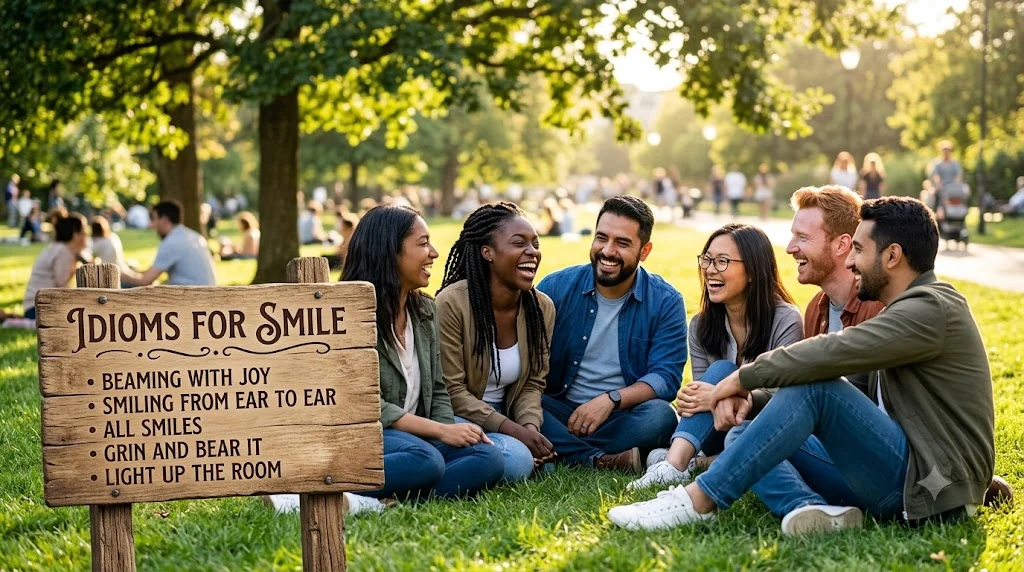
Idioms for smiles help you describe happiness, warmth, confidence, amusement, or hidden emotions in a far more natural way than simply saying someone “smiled.” Common expressions like grin from ear to ear, smile from ear to ear, and crack a smile make your English sound more vivid and conversational in both speaking and writing.
We all know what a smile looks like, but have you ever struggled to describe its flavor? A simple ‘smile’ is often just not enough to capture the moment. In daily life, we see so many types of smiles the smug smirk of a colleague, the bright beam of a child, or the sly grin of a friend sharing a secret. That’s where idioms come in.
Instead of repeatedly saying “she smiled,” the English language offers a rich palette of expressive idioms that bring color, emotion, and personality into your speech and writing. When someone says “he was grinning from ear to ear,” you instantly picture a wide, happy face. If someone “wears a Cheshire cat grin,” you know their smile is mysterious and slightly unsettling.
These idioms are especially useful in conversations, storytelling, and even creative writing. However, to use them naturally, you need to understand the context, tone, and subtle intention behind them.
In this comprehensive guide, you’ll learn:
- Powerful idioms for every type of smile
- Real meanings and situations
- Formal, casual, and creative examples
- Practical tips for natural usage
- Common mistakes to avoid
Let’s explore the most expressive idioms that will bring your descriptions of smiles to life.
Quick Summary Table
| Situation | Idioms |
|---|---|
| Big, happy smile | Grin from ear to ear, Beam, Smile from ear to ear |
| Sneaky or proud smile | Smirk, Smile like a Cheshire cat, Curl of the lips |
| Kind & warm smile | Warm smile, Smile that lights up a room |
| Forced or fake smile | Put on a brave face, Smile through gritted teeth |
| Sly & knowing smile | Sly smile, Know-it-all grin |
| Opposite of smile | Wipe the smile off your face, Turn that frown upside down |
😃 Idioms for a Big, Happy Smile
Sometimes a smile is so large and genuine that it seems to take over the entire face. These idioms are perfect for describing pure, unadulterated joy.
1. Grin from Ear to Ear
This is perhaps the most classic idiom for a wide, happy smile. It’s a vivid, visual way to say someone is incredibly pleased.
Meaning: To smile so widely that the mouth stretches nearly from one ear to the other.
When People Use It: To describe extreme happiness, excitement, or pride.
Alternative Expression: A beaming smile, a huge grin.
Examples:
- Formal: The CEO was grinning from ear to ear as he announced the company’s record-breaking profits.
- Casual: She was grinning from ear to ear when she got her exam results.
- Creative: A sunny grin stretched from ear to ear across his face, a testament to his victory.
2. Beam
To ‘beam’ is more than just a smile; it’s a radiant expression that seems to emit light and warmth. It’s often associated with parental pride or immense personal satisfaction.
Meaning: To smile with obvious pleasure and pride.
When People Use It: To describe a genuinely happy and proud smile, often seen at graduations, weddings, or when receiving an award.
Alternative Expression: Glow with happiness, Radiate joy.
Examples:
- Formal: The parents beamed with pride as their daughter received her diploma.
- Casual: He was beaming after his team won the championship.
- Creative: Her face beamed, reflecting the joy that danced in her heart.
3. Smile from Ear to Ear
This idiom is very similar to ‘grin from ear to ear’. It creates an image of a huge, unstoppable smile.
Meaning: To smile a very wide smile.
When People Use It: To show intense approval, happiness, or satisfaction.
Alternative Expression: A mile-wide smile.
Examples:
- Formal: The award winner had a smile from ear to ear as he accepted the trophy.
- Casual: I had a smile from ear to ear when I saw the surprise party.
- Creative: A smile from ear to ear, a universal expression of pure delight, graced his face.
💡 Usage Insight:
These idioms are best used for moments of visible and undeniable joy. They paint a picture of happiness that is impossible to hide.
🧐 Idioms for a Sneaky, Proud, or Mischievous Smile
Not all smiles are friendly. Some are tinged with pride, smugness, or a secret, clever thought. These idioms help you describe those more complex expressions.
4. Smirk
A ‘smirk’ is perhaps the most famous non-happy smile. It’s a smile that often carries a sense of smugness, superiority, or amusement at someone else’s expense.
Meaning: A smile that suggests that you know something that others don’t, or that you feel superior.
When People Use It: To describe an expression of self-satisfaction, arrogance, or sly amusement.
Alternative Expression: Smug grin, Self-satisfied smile.
Examples:
- Formal: The lawyer wore a confident smirk, knowing he had won the case.
- Casual: Wipe that smirk off your face; it’s not funny.
- Creative: He had the smirk of a fox that had just raided the henhouse.
5. Smile like a Cheshire Cat
This idiom comes from Lewis Carroll’s Alice in Wonderland. The Cheshire Cat has a magical ability to disappear, leaving only its wide, enigmatic grin behind. It describes a smile that is mysterious, unsettling, or just too knowing.
Meaning: To smile broadly, often in a way that is mysterious, silly, or creepy.
When People Use It: To describe someone with a fixed, unnerving smile or someone who knows a secret and is enjoying the fact that you don’t.
Alternative Expression: An enigmatic grin, A mysterious smile.
Examples:
- Formal: He sat in the corner, smiling like a Cheshire cat, but refused to share the secret.
- Casual: What are you grinning about? You’re smiling like a Cheshire cat!
- Creative: Her smile was a ghost, a Cheshire cat grin that faded into the shadows.
6. Curl of the Lips
This is a subtle idiom that describes a small, controlled smile, often suggesting contempt, amusement, or a hidden thought.
Meaning: A slight, often mocking or bitter, smile where the lips turn up just a little.
When People Use It: To describe an expression of quiet satisfaction, sarcasm, or suppressed anger.
Alternative Expression: Wry smile, Sardonic smile.
Examples:
- Formal: A faint curl of the lips hinted at his disagreement with the proposal.
- Casual: I saw the curl of her lips and knew she was up to something.
- Creative: A bitter curl of the lips was his only reply to her heartfelt plea.
😊 Idioms for a Warm, Kind, and Friendly Smile
A genuine smile is often associated with kindness and an invitation to connect. These idioms are perfect for warm, welcoming situations.
7. Warm Smile
This is a simple but effective way to describe a smile that is not only happy but also friendly and inviting.
Meaning: A friendly, pleasant, and sincere smile that puts others at ease.
When People Use It: To describe a host, a friend, or someone you feel comfortable with.
Alternative Expression: Welcoming smile, Friendly grin.
Examples:
- Formal: She greeted every guest with a warm smile that instantly made them feel at home.
- Casual: The waiter had a warm smile that made the meal more enjoyable.
- Creative: A warm smile blossomed on her face, a silent welcome to the tired traveler.
8. Smile that Lights Up a Room
This is a powerful metaphor for a person whose smile is so captivating and joyful that it changes the entire atmosphere of a place.
Meaning: To have a very attractive, happy, and infectious smile.
When People Use It: To describe someone with a charismatic and positive presence.
Alternative Expression: A radiant smile, A captivating smile.
Examples:
- Formal: Her smile could light up a room, making even the most mundane event feel special.
- Casual: When she walks in, her smile just lights up the whole place.
- Creative: The baby’s gummy smile was a beacon, a tiny smile that could light up the darkest room.
😬 Idioms for a Forced or Fake Smile
Sometimes we have to smile even when we don’t want to. These idioms describe the painful or insincere expressions we put on when we’re trying to be polite or brave.
9. Put On a Brave Face / Put On a Brave Smile
This is a classic idiom for when someone is dealing with disappointment, pain, or bad news but tries to act okay for the sake of others.
Meaning: To try to appear happy and confident in a difficult or unhappy situation.
When People Use It: To describe someone trying to hide their true feelings.
Alternative Expression: Smile through the pain, Keep a stiff upper lip.
Examples:
- Formal: Despite the disappointing results, the team leader put on a brave smile for the company.
- Casual: I know you’re upset, but try to put on a brave face for the kids.
- Creative: She was drowning in sorrow but managed to surface, just long enough to flash a brave smile.
10. Smile Through Gritted Teeth
This is a more extreme version of a forced smile. It implies that you are very angry or frustrated but are holding back your true feelings.
Meaning: To smile while feeling very angry or annoyed.
When People Use It: To describe a situation where you are trying to be polite to someone you dislike or when you’re being forced to accept a bad situation.
Alternative Expression: Bare a smile, Forced politeness.
Examples:
- Formal: He smiled through gritted teeth as he congratulated his rival on the promotion.
- Casual: I had to smile through gritted teeth when he made that terrible joke.
- Creative: Her smile was a fragile mask, held in place by sheer willpower, a smile through gritted teeth.
😏 Idioms for a Sly or Knowing Smile
These idioms describe the kind of smile that suggests you have inside information or are in on a joke that no one else gets.
11. Sly Smile
A ‘sly smile’ is not a happy smile; it is a knowing and slightly devious expression.
Meaning: A smile that shows you know something that is not known by other people, often in a way that suggests mischief or cunning.
When People Use It: To describe someone who looks like they’re plotting something or hiding a secret.
Alternative Expression: A cunning grin, A knowing look.
Examples:
- Formal: He had a sly smile on his face as he watched his colleague struggle with the puzzle he had created.
- Casual: What are you plotting? I don’t like that sly smile.
- Creative: A sly smile flickered on his lips, a silent promise of the chaos to come.
12. Know-it-all Grin
This is a specific type of smug smile often directed at someone who has just proven they were right or have superior knowledge.
Meaning: A patronizing smile that suggests you know more than the other person.
When People Use It: To describe someone who is being arrogant or condescending.
Alternative Expression: A smug smile, A self-satisfied smirk.
Examples:
- Formal: She gave him a know-it-all grin after pointing out the error in his calculations.
- Casual: I hate that know-it-all grin he gets whenever he wins an argument.
- Creative: His know-it-all grin was a silent boast, a trophy of a minor intellectual victory.
😥 Idioms for When a Smile Fails
Sometimes, a smile disappears, or you want to tell someone to stop smiling. These idioms help you describe those situations.
13. Wipe the Smile Off Your Face
This is a common, aggressive idiom that you say to someone when you want them to stop being so happy or smug.
Meaning: To make someone stop smiling, often by threatening them or making them sad.
When People Use It: As a threat or a very direct command.
Alternative Expression: Remove that grin, Lose the smile.
Examples:
- Formal: The manager’s stern tone was enough to wipe the smile off the junior employee’s face.
- Casual: Just you wait until I get my hands on you; I’ll wipe that smile off your face!
- Creative: The devastating news landed like a physical blow, instantly wiping the smile off his face.
14. Turn That Frown Upside Down
This is a sweet, often childlike idiom used to cheer someone up. It literally means to make them smile.
Meaning: To make a sad person smile.
When People Use It: To comfort someone who is sad or upset.
Alternative Expression: Cheer up, Put a smile on your face.
Examples:
- Formal: The old man told the sad child to turn that frown upside down.
- Casual: Come on, buddy, turn that frown upside down!
- Creative: Her silly antics were a magic spell, turning his frown upside down.
🎯 How to Use Idioms for “Smile” Naturally
Using idioms related to smiles can make your language more expressive and engaging. The goal isn’t just to sound interesting; it’s to sound natural, relatable, and accurate.
Let’s break it down in a way that actually helps you use these idioms in real life.
✔ Match the Situation
Not all smile idioms are interchangeable. Some are positive, some are negative, and some are just plain odd.
- For pure, happy smiles: Use “grin from ear to ear,” “beam,” or “warm smile.”
- Example: “He was beaming with pride at his daughter’s graduation.”
- For negative or smug smiles: Use “smirk,” “curl of the lips,” or “sly smile.”
- Example: “She gave him a sly smile, letting him know she was in on the secret.”
- For forced smiles: Use “put on a brave face” or “smile through gritted teeth.”
- Example: “Although she was devastated, she tried to put on a brave face for her children.”
✔ Keep Tone in Mind
Here’s where most people slip up. Not every idiom fits every situation. Some can sound aggressive, too casual, or even insensitive.
- Saying “Wipe that smile off your face” is aggressive and should only be used in very specific contexts, like in a threat or with a close friend as a joke.
- Saying “She was smirking” is more appropriate for a friend who is being cheeky. You might not want to use it to describe your boss in a formal report.
✔ Use Sparingly
Idioms are like spice; a little adds flavor, but too much ruins the dish. You don’t want to write:
“He beamed with a smile that lit up the room, his smirk turning into a grin from ear to ear as he gave me a sly look.”
It sounds unnatural and forced. Instead, pick one strong idiom:
“His beaming smile lit up the room.”
✔ Practice by Visualizing
When you learn a new idiom, don’t just memorize the definition. Close your eyes and imagine the smile. What does it look like? What is the person feeling? This will help you recall the right idiom at the right time.
- “Smirk”: Visualize someone smugly winning a game.
- “Grin from ear to ear”: Visualize a child opening a birthday present.
- “Smile through gritted teeth”: Visualize someone being forced to be polite to a person they hate.
⚠️ Common Mistakes to Avoid
Even advanced learners slip up. Avoid these to sound more natural and confident.
- ❌ Using a positive idiom for a negative situation: Don’t say someone is “beaming” if they are actually being smug. A smirk is more appropriate.
- ❌ Confusing “smirk” with “smile”: A smirk is almost always negative. A smile can be positive or neutral. Saying “she smiled” is safe. Saying “she smirked” implies she was being arrogant or sly.
- ❌ Overusing the same idiom: If you use “grin from ear to ear” too much, it loses its power. Mix it up with “beam,” “smile from ear to ear,” or “beaming smile.”
🚀 Practice Method
Learning idioms isn’t just about memorization; it’s about usage.
Here’s a simple but powerful method to integrate these idioms into your vocabulary:
1. Learn 3 Idioms Daily
Don’t overload yourself. Focus on a few and understand their tone and context.
- For example, focus on: “Grin from ear to ear,” “Smirk,” and “Put on a brave face.”
2. Use Them in Real Conversations
Even simple sentences help.
- “My daughter was grinning from ear to ear after her dance recital.”
- “He was smirking the whole time, like he knew a secret.”
- “I had to put on a brave face at the funeral.”
The more you use them, the more natural they feel.
3. Write One Creative Sentence for Each
This is where real improvement happens. Instead of basic sentences, try expressive ones:
- “Her grin from ear to ear was a silent shout of triumph.”
- “His smirk was a poisonous dart, aimed directly at my self-esteem.”
- “Her smile through gritted teeth was a brittle shield, protecting a heart full of anger.”
💡 Memory Trick: The more visual and emotional your sentence is, the easier the idiom sticks in your mind.
❓ FAQs
1. What is the difference between a “smile” and a “smirk”?
A smile generally indicates happiness, friendliness, or amusement. A smirk specifically suggests smugness, arrogance, or slyness, and is often seen as rude or irritating.
2. Can I use “beam” in formal writing?
Yes, “beam” is a great, expressive word that works well in both formal and informal contexts to show strong, visible pride or joy.
3. What is a “Cheshire cat smile”?
It refers to a smile that is broad, mysterious, and often unsettling. It comes from the character in Lewis Carroll’s Alice in Wonderland who had a huge, permanent grin.
4. Are these idioms common in daily conversation?
Yes, idioms like “grin from ear to ear,” “smirk,” and “put on a brave face” are extremely common and can be heard in casual conversations, movies, and books all the time.
5. How do I remember these idioms?
Practice regularly and connect them with real situations. Every time you see someone smiling in a certain way, try to find the right idiom to describe that smile.
✅ Conclusion
Idioms for “smile” add incredible nuance, emotion, and personality to your language. Instead of repeating simple words, you can express yourself in a way that feels more natural, engaging, and colorful whether you’re describing pure joy, hidden mischief, or painful frustration.
The key is simple: understand the context, choose wisely, and practice consistently.
Once you start using these idioms in your real conversations and writing, your English will feel more alive, expressive, and truly human. A smile is a universal language, and now you have the right vocabulary to describe it perfectly.
Read More Related Articles:
- Idioms for Heart | Express Love, Courage, Sadness & Emotion In 2026
- Idioms for Nature | Expressing the Natural World Beautifully In 2026
- Idioms for Green | Expressing Growth, Envy & Inexperience In 2026

Urban Hunter is an American writer at IdiomCrafter.com, with a keen interest in how language shapes everyday conversations. She enjoys turning common expressions into engaging and easy-to-follow reads. Outside of writing, she spends time exploring new words and their hidden meanings.