Quick Answer
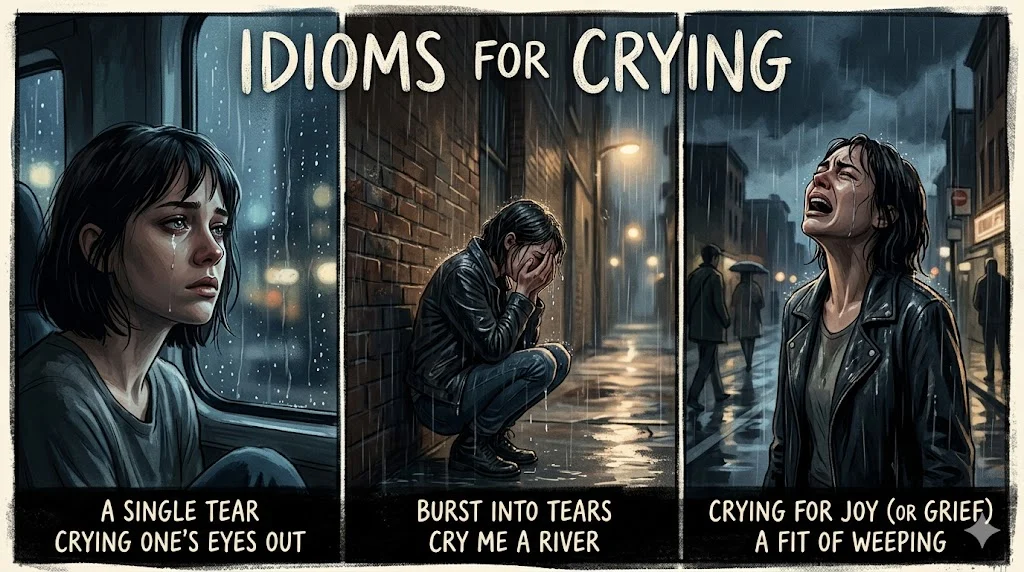
Idioms for crying are expressive phrases used to describe sadness, emotional pain, or even dramatic reactions helping you communicate feelings more vividly.
Examples: cry your eyes out, break down in tears, be in floods of tears
Crying is one of the most natural human responses it can express sadness, relief, frustration, or even joy. But instead of simply saying “I cried,” English gives us a wide range of idioms for crying that make our emotions feel more real, vivid, and relatable.
Think about phrases like “she burst into tears” or “he cried his eyes out.” These expressions don’t just describe crying they show the intensity behind it. They help listeners and readers truly feel what’s happening.
Whether you’re writing a story, expressing your emotions, or improving your spoken English, learning these idioms will make your communication more natural and engaging.
In this guide, you’ll explore:
- Idioms for crying
- Their meanings and real-life usage
- Formal, casual, and creative examples
- Practical tips to use them naturally
Let’s explore the most expressive idioms that bring emotions to life.
Quick Summary Table
| Situation | Idiom Examples |
|---|---|
| Sudden crying | Burst into tears, Break down |
| Intense crying | Cry your eyes out, Sob your heart out |
| Silent crying | Fight back tears, Hold back tears |
| Emotional pain | Heart melts, Lump in throat |
| Dramatic crying | Cry a river, Turn on the waterworks |
😢 Idioms for Sudden Crying
Sometimes emotions hit instantly, and tears follow without warning.
1. Burst into Tears
This idiom describes a moment when emotions become overwhelming all at once.
Meaning: Suddenly start crying
When People Use It: Emotional shock or strong feelings
Alternative Expression: Break down crying
Examples:
Formal: She burst into tears during the speech.
Casual: He just burst into tears.
Creative: Emotions overflowed in a sudden wave.
2. Break Down in Tears
Not all crying is quiet sometimes it comes with a complete emotional collapse.
Meaning: Lose control and start crying
When People Use It: Emotional breakdown
Alternative Expression: Collapse emotionally
Examples:
Formal: He broke down in tears after the announcement.
Casual: She just broke down.
Creative: His strength crumbled into tears.
3. Well Up
This idiom focuses on the moment just before tears fall.
Meaning: Tears begin to form in the eyes
When People Use It: Emotional buildup
Alternative Expression: Eyes fill with tears
Examples:
Formal: Tears welled up in her eyes.
Casual: My eyes just welled up.
Creative: Emotion gathered quietly behind her eyes.
💡 Usage Insight: These idioms are perfect when emotions appear suddenly and uncontrollably.
😭 Idioms for Intense Crying
Some situations bring deep emotional pain, leading to strong and visible crying.
4. Cry Your Eyes Out
This idiom emphasizes intense and prolonged crying.
Meaning: Cry a lot
When People Use It: Deep sadness or heartbreak
Alternative Expression: Cry heavily
Examples:
Formal: She cried her eyes out after the loss.
Casual: I cried my eyes out last night.
Creative: Tears flowed endlessly like a river.
5. Sob Your Heart Out
This expression highlights emotional depth along with crying.
Meaning: Cry intensely with emotion
When People Use It: Emotional release
Alternative Expression: Cry deeply
Examples:
Formal: He sobbed his heart out in private.
Casual: She was sobbing like impulsive.
Creative: His heart poured out through tears.
6. Be in Floods of Tears
This idiom paints a dramatic picture of heavy crying.
Meaning: Cry excessively
When People Use It: Overwhelming sadness
Alternative Expression: Cry uncontrollably
Examples:
Formal: She was in floods of tears.
Casual: He was crying nonstop.
Creative: Tears flowed like a heavy storm.
💡 Memory Tip: Think of water imagery (river, flood, flow) to remember these idioms easily.
😶 Idioms for Holding Back Tears
Not all crying is visible sometimes people struggle to control their emotions.
7. Fight Back Tears
This idiom shows emotional strength and restraint.
Meaning: Try not to cry
When People Use It: Emotional control
Alternative Expression: Hold back tears
Examples:
Formal: She fought back tears during the speech.
Casual: I tried not to cry.
Creative: Tears trembled but never fell.
8. Hold Back Tears
Closely related to emotional discipline and control.
Meaning: Prevent yourself from crying
When People Use It: Emotional situations
Alternative Expression: Suppress tears
Examples:
Formal: He held back tears at the ceremony.
Casual: I held it in.
Creative: Emotions stayed locked behind his eyes.
9. Choke Up
Sometimes emotions stop you from even speaking.
Meaning: Become unable to speak due to emotion
When People Use It: Emotional moments
Alternative Expression: Get emotional
Examples:
Formal: She choked up while speaking.
Casual: I got choked up.
Creative: Words faded as emotions took over.
💔 Idioms for Emotional Pain
Crying is often tied to deeper emotional experiences.
10. Have a Lump in Your Throat
This idiom describes a physical feeling linked to emotion.
Meaning: Feel like crying
When People Use It: Emotional situations
Alternative Expression: Feel emotional
Examples:
Formal: He had a lump in his throat.
Casual: I felt like crying.
Creative: Emotion tightened around his voice.
11. Heart Melts
Not always sadness sometimes crying comes from deep emotional warmth.
Meaning: Feel strong emotion
When People Use It: Touching situations
Alternative Expression: Feel deeply moved
Examples:
Formal: Her heart melted at the sight.
Casual: That made me emotional.
Creative: Warmth softened her emotions into tears.
12. Break Someone’s Heart
Often leads to emotional pain and tears.
Meaning: Cause deep emotional sadness
When People Use It: Relationships or loss
Alternative Expression: Hurt deeply
Examples:
Formal: The news broke his heart.
Casual: That really hurt me.
Creative: His heart shattered silently.
💡 Usage Insight: These idioms connect crying with deep emotional experiences, not just tears.
🎭 Idioms for Dramatic or Fake Crying
Sometimes crying isn’t genuine it’s exaggerated or intentional.
13. Cry a River
Used when someone is seen as overly emotional.
Meaning: Cry excessively (often exaggerated)
When People Use It: Mild sarcasm
Alternative Expression: Overreact
Examples:
Formal: He cried a river over a minor issue.
Casual: Stop crying a river.
Creative: Tears flowed far beyond the moment.
14. Turn on the Waterworks
This idiom suggests intentional or dramatic crying.
Meaning: Start crying dramatically
When People Use It: Manipulative situations
Alternative Expression: Fake crying
Examples:
Formal: She turned on the waterworks.
Casual: Here come the tears again.
Creative: Emotions appeared on cue.
15. Put on a Show
Sometimes emotions are exaggerated for effect.
Meaning: Act dramatically
When People Use It: Attention-seeking behavior
Alternative Expression: Pretend
Examples:
Formal: He put on a show of emotion.
Casual: She’s just acting.
Creative: Every tear felt rehearsed.
🌧️ Idioms for Continuous or Lingering Crying
Some emotions don’t pass quickly they stay and continue over time.
16. Cry Yourself to Sleep
A deeply emotional and relatable expression.
Meaning: Cry until you fall asleep
When People Use It: Sadness or loneliness
Alternative Expression: Sleep while crying
Examples:
Formal: She cried herself to sleep.
Casual: I cried till I slept.
Creative: Tears faded into restless dreams.
17. Weep Bitterly
This idiom highlights emotional intensity and pain.
Meaning: Cry with deep sadness
When People Use It: Loss or grief
Alternative Expression: Cry deeply
Examples:
Formal: He wept bitterly at the funeral.
Casual: She cried a lot.
Creative: His sorrow echoed through every tear.
18. Shed Tears
A softer and more formal way to describe crying.
Meaning: Cry quietly
When People Use It: Formal or literary context
Alternative Expression: Cry gently
Examples:
Formal: She shed tears of sorrow.
Casual: She cried a little.
Creative: Tears slipped silently down her face.
💫 Idioms for Emotional Release
Crying isn’t always negative it can also bring relief.
19. Have a Good Cry
Sometimes crying helps you feel better.
Meaning: Cry to release emotions
When People Use It: Emotional healing
Alternative Expression: Let it out
Examples:
Formal: She had a good cry.
Casual: I just needed to cry.
Creative: Tears washed away the weight of emotions.
20. Let It All Out
This idiom focuses on emotional release.
Meaning: Express emotions freely
When People Use It: Stress relief
Alternative Expression: Release emotions
Examples:
Formal: He let it all out.
Casual: Just cry it out.
Creative: Emotions poured out freely.
21. Cry with Relief
Not all tears come from sadness.
Meaning: Cry because you feel relieved
When People Use It: After stress or fear
Alternative Expression: Emotional relief
Examples:
Formal: She cried with relief.
Casual: I was so relieved I cried.
Creative: Tears fell like a gentle release.
⚠️ Idioms Related to Emotional Sensitivity
Some people cry more easily than others.
22. Be Close to Tears
This idiom shows emotional vulnerability.
Meaning: Almost crying
When People Use It: Emotional moments
Alternative Expression: On the verge of tears
Examples:
Formal: She was close to tears.
Casual: I was about to cry.
Creative: Tears lingered just beneath the surface.
23. On the Verge of Tears
A slightly more intense version of emotional buildup.
Meaning: About to cry
When People Use It: Emotional pressure
Alternative Expression: Nearly crying
Examples:
Formal: He was on the verge of tears.
Casual: I almost cried.
Creative: Emotions stood at the edge of breaking.
24. Cry Over Spilled Milk
Not all crying is justified sometimes it’s about regret.
Meaning: Be upset over something that cannot be changed
When People Use It: Minor problems
Alternative Expression: Regret unnecessarily
Examples:
Formal: There’s no point crying over spilled milk.
Casual: It already happened, move on.
Creative: Tears couldn’t rewrite the past.
25. Tear Up
A subtle and common expression for emotional moments.
Meaning: Begin to cry slightly
When People Use It: Mild emotional reaction
Alternative Expression: Get emotional
Examples:
Formal: He teared up during the speech.
Casual: I got a little teary.
Creative: Emotion shimmered softly in his eyes.
🧠 How to Use Idioms for Crying Naturally
Using idioms about crying isn’t just about vocabulary it’s about expressing emotion in the right tone, situation, and intensity. When used correctly, they make your speech feel more human, relatable, and expressive.
✔ Match the Emotion
Not all crying is the same sometimes it’s light and emotional, other times it’s intense and overwhelming. Your idiom should reflect that level of feeling.
- Light sadness or emotional moments:
→ tear up, get emotional
Example: I teared up during that movie scene. - Deep pain or heartbreak:
→ cry your eyes out, break down in tears
Example: She cried her eyes out after hearing the news.
💡 Tip: Always ask yourself How strong is the emotion? Then choose the idiom accordingly.
✔ Use in the Right Context
Some idioms sound natural in casual conversations, while others fit better in formal or written English.
- Formal or professional tone:
→ shed tears, be moved to tears
Example: He was moved to tears by the speech. - Casual or everyday conversations:
→ cry it out, burst into tears
Example: Sometimes you just need to cry it out.
💡 Tip: If you’re speaking to friends, go casual. If writing professionally, choose softer, neutral expressions.
✔ Avoid Overuse
Idioms are powerful but too many in one sentence can make your language sound forced or unnatural.
❌ Wrong: I cried my eyes out and burst into tears and broke down completely.
✔ Better: I cried my eyes out after everything happened.
💡 Tip: Use one strong idiom at a time for maximum impact.
⚠️ Common Mistakes to Avoid
Even advanced learners sometimes misuse idioms. Here are the most common pitfalls:
- ❌ Ignoring emotional tone
Using a dramatic idiom for a small situation can sound exaggerated. - ❌ Using informal idioms in formal writing
Example: “He cried his eyes out” in a report sounds unprofessional. - ❌ Mixing idioms incorrectly
Example: “He burst his eyes out” ❌ (incorrect combination)
💡 Rule: Learn idioms as complete phrases don’t modify them randomly.
🎯 Simple Practice Method (That Actually Works)
You don’t need to memorize 50 idioms at once. Consistency is what makes them natural.
Step 1: Learn 2–3 Idioms Daily
Focus on meaning + situation (not just definition).
Step 2: Create Real-Life Sentences
Connect idioms to your own experiences.
Example: I almost teared up when I saw my old school.
Step 3: Speak Them Out Loud
Practice in conversations, even if it’s just with yourself.
Step 4: Notice Native Usage
Watch movies, shows, or interviews see how idioms are used naturally.
💡 Pro Insight:
Fluency doesn’t come from knowing many idioms it comes from using the right idiom at the right moment.
FAQs
1. What are idioms for crying?
They are expressions used to describe crying in a more vivid and emotional way.
2. Are these idioms formal or informal?
Most are informal, but some can be used in formal contexts.
3. How can I remember them?
Associate them with emotions and real-life situations.
4. Can I use them in writing?
Yes, especially in storytelling and blogs.
5. Why are they important?
They make your communication more expressive and natural.
Conclusion
Crying is more than just tears it’s a powerful emotional expression, and idioms help you capture that depth in language. Whether you burst into tears, fight back emotions, or cry your eyes out, each phrase adds a layer of meaning that simple words cannot.
The key is to use these idioms naturally. Start with a few, practice them in conversations, and gradually make them part of your everyday language.
Over time, you’ll not only improve your English but also learn how to express emotions in a way that truly connects with others.
Read More Related Articles:
- Idioms for Strong | Powerful Expressions to Strengthen Your Language In 2026
- Idioms for Anger | Powerful Expressions to Describe Anger Naturally In 2026
- Idioms for Speed | Fast-Paced Expressions to Energize Your English In 2026

Urban Hunter is an American writer at IdiomCrafter.com, with a keen interest in how language shapes everyday conversations. She enjoys turning common expressions into engaging and easy-to-follow reads. Outside of writing, she spends time exploring new words and their hidden meanings.