Quick Answer
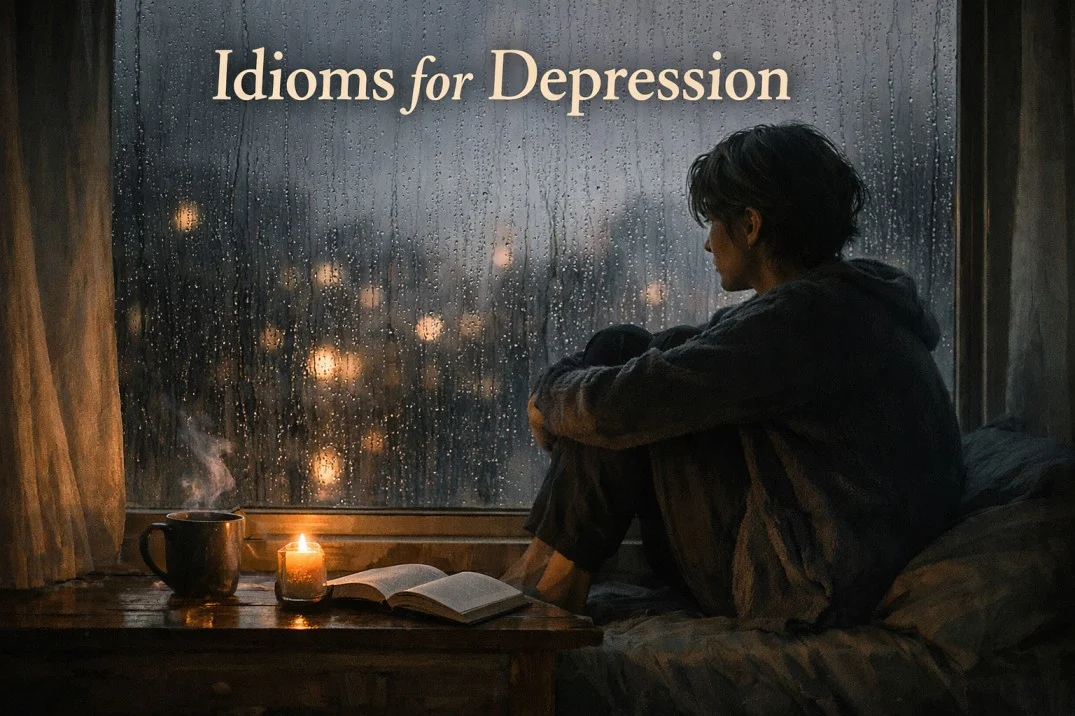
Idioms for depression are expressions used to describe sadness, emotional heaviness, hopelessness, and mental exhaustion in a more vivid and relatable way. They help you communicate difficult feelings naturally and meaningfully.
Depression is not just sadness it’s a complex emotional state that can feel heavy, silent, and difficult to explain. While simple phrases like “I feel sad” or “I’m down” exist, they often fail to capture the depth and nuance of what someone is experiencing.
That’s where idioms come in. Idioms for depression allow you to express emotional weight, emptiness, exhaustion, and struggle in a way that feels more human and relatable. Native speakers often use these expressions to describe mood changes, emotional lows, and difficult periods in life whether in conversations, storytelling, or writing.
However, it’s important to use these idioms with awareness and sensitivity. Some are casual, while others reflect deeper emotional states. Understanding when and how to use them helps you communicate more effectively without sounding insensitive.
In this guide, you’ll explore idioms for depression, grouped by real-life emotional situations. Each one includes meanings, examples, and practical usage tips to help you express yourself clearly and naturally.
Let’s explore the most expressive idioms that bring emotional depth to language.
Quick Summary Table
| Situation | Idioms |
|---|---|
| Feeling Low | Down in the dumps, Feeling blue, Low spirits |
| Emotional Heaviness | Heavy heart, Weighed down, Carry the weight |
| Hopelessness | At rock bottom, Lost cause, No light at the end of the tunnel |
| Mental Exhaustion | Burned out, Drained, Running on empty |
| Withdrawal | Shut down, Pull away, Keep to oneself |
😔 Idioms for Depression With Meanings & Examples
🌧️ Idioms for Feeling Low & Sadness
Not all sadness is loud. Sometimes, it quietly settles into your mood, affecting how you think, speak, and move through the day. These idioms help express those softer, lingering emotional lows in a natural and relatable way.
1. Down in the Dumps
This widely used idiom describes a noticeable drop in mood, where someone feels emotionally low without necessarily expressing it outwardly.
Meaning: Feeling sad or depressed
When People Use It: Emotional downturns or low mood phases
Alternative Expression: Feeling low
Examples:
Formal: He seemed down in the dumps after hearing the news.
Casual: I’ve been really down lately.
Creative: His mood sank like a fading sunset.
2. Feeling Blue
A gentle and commonly used expression that captures mild sadness without intensity.
Meaning: Feeling sad or melancholic
When People Use It: Light emotional sadness or reflective moods
Alternative Expression: Melancholy
Examples:
Formal: She has been feeling blue these days.
Casual: I’m just feeling a bit blue.
Creative: A quiet sadness colored her thoughts.
3. Low Spirits
This idiom reflects emotional heaviness combined with a lack of energy or enthusiasm.
Meaning: Feeling unhappy or discouraged
When People Use It: Emotional fatigue or disappointment
Alternative Expression: Discouraged
Examples:
Formal: He remained in low spirits after the failure.
Casual: I’m not feeling great today.
Creative: His energy faded into silence.
💡 Usage Insight:
These idioms are best suited for mild to moderate sadness, where emotions feel heavy but not overwhelming.
💔 Idioms for Emotional Heaviness & Inner Pain
Some feelings go deeper than surface-level sadness. These idioms express emotional weight, personal struggle, and internal pain that’s often hard to explain directly.
4. Heavy Heart
This idiom reflects deep emotional sorrow, often connected to loss, regret, or difficult decisions.
Meaning: Feeling deep sorrow
When People Use It: Grief, regret, or emotional pain
Alternative Expression: Heartbroken
Examples:
Formal: She spoke with a heavy heart.
Casual: I feel really heavy inside.
Creative: Her heart carried unspoken weight.
5. Weighed Down
When emotions feel like a burden, this idiom perfectly captures that sense of pressure.
Meaning: Burdened by sadness or stress
When People Use It: Emotional overwhelm or responsibilities
Alternative Expression: Overwhelmed
Examples:
Formal: He felt weighed down by responsibilities.
Casual: I feel so heavy today.
Creative: Invisible weight pulled him downward.
6. Carry the Weight of the World on Your Shoulders
A powerful expression that emphasizes extreme emotional and mental burden.
Meaning: Feel extreme emotional pressure
When People Use It: Responsibility, stress, or personal struggles
Alternative Expression: Overburdened
Examples:
Formal: She seemed to carry the weight of the world on her shoulders.
Casual: I feel like everything’s on me.
Creative: The world rested heavily upon her spirit.
🌑 Idioms for Hopelessness & Despair
At times, sadness turns into something deeper hopelessness. These idioms capture moments when people feel stuck, lost, or unable to see a way forward.
7. At Rock Bottom
This idiom represents the lowest emotional point, where things feel at their worst.
Meaning: At the lowest emotional stage
When People Use It: Deep struggles or life crises
Alternative Expression: Lowest point
Examples:
Formal: He hit rock bottom after losing everything.
Casual: I feel like I’m at rock bottom.
Creative: He stood at the edge of nothingness.
8. No Light at the End of the Tunnel
A vivid metaphor for situations that seem never-ending and without hope.
Meaning: No hope for improvement
When People Use It: Long-term struggles or ongoing difficulties
Alternative Expression: Hopeless
Examples:
Formal: She saw no light at the end of the tunnel.
Casual: It feels like this will never end.
Creative: Darkness stretched endlessly ahead.
9. A Lost Cause
This idiom reflects a complete loss of hope in a situation or outcome.
Meaning: Something unlikely to improve
When People Use It: Giving up on a situation
Alternative Expression: Hopeless situation
Examples:
Formal: He believed it was a lost cause.
Casual: I don’t think this will work.
Creative: Hope slipped quietly away.
💡 Memory Tip:
Idioms related to hopelessness often include imagery of darkness, endings, or emptiness, making them easier to remember.
🧠 Idioms for Mental Exhaustion & Burnout
Emotional strain often leads to mental fatigue. These idioms describe the feeling of being drained, overworked, or completely out of energy.
10. Burned Out
A modern idiom widely used in both professional and personal contexts.
Meaning: Emotionally and mentally exhausted
When People Use It: Work stress or prolonged pressure
Alternative Expression: Exhausted
Examples:
Formal: She felt burned out after months of intense work.
Casual: I’m totally burned out.
Creative: Her energy faded into ashes.
11. Drained
A simple yet powerful way to express complete emotional exhaustion.
Meaning: Completely exhausted emotionally
When People Use It: After stressful or emotional experiences
Alternative Expression: Worn out
Examples:
Formal: He felt drained after the experience.
Casual: I feel so drained today.
Creative: Every ounce of energy slipped away.
12. Running on Empty
This idiom emphasizes continuing despite having no energy left.
Meaning: Having no energy remaining
When People Use It: Long-term fatigue or burnout
Alternative Expression: Exhausted
Examples:
Formal: She was running on empty by the end of the week.
Casual: I have no energy left.
Creative: He moved forward with nothing left inside.
🚪 Idioms for Withdrawal & Isolation
When emotions become overwhelming, people often withdraw. These idioms reflect distancing, silence, and emotional closure.
13. Shut Down
Describes a moment when someone stops expressing emotions entirely.
Meaning: Emotionally close off
When People Use It: Emotional overwhelm or stress
Alternative Expression: Withdraw
Examples:
Formal: He shut down emotionally after the argument.
Casual: I just stopped talking.
Creative: Silence became his only response.
14. Keep to Oneself
A quieter form of isolation, where someone avoids interaction.
Meaning: Avoid social interaction
When People Use It: Preference for solitude or emotional distancing
Alternative Expression: Stay alone
Examples:
Formal: She tends to keep to herself.
Casual: I just want to be alone.
Creative: She built quiet walls around her.
15. Pull Away
This idiom describes emotional distance developing over time.
Meaning: Distance oneself emotionally
When People Use It: Relationship or emotional withdrawal
Examples:
Formal: He began to pull away from others.
Casual: I feel like distancing myself.
Creative: He drifted away like a fading echo.
😞 Idioms for Emotional Struggle & Inner Conflict
Some emotions are invisible battles. These idioms express internal conflict and emotional breakdowns.
16. Fight an Inner Battle
A powerful expression for silent emotional struggles.
Meaning: Struggle internally
When People Use It: Mental or emotional conflict
Examples:
Formal: She is fighting an inner battle.
Casual: I’m struggling inside.
Creative: A silent war raged within her.
17. Fall Apart
Describes losing emotional stability under pressure.
Meaning: Lose emotional control
When People Use It: Stress or emotional breakdown
Examples:
Formal: He began to fall apart under stress.
Casual: I just broke down.
Creative: Everything within him started to crumble.
18. Break Down
A very common idiom used when emotions become overwhelming.
Meaning: Cry or lose emotional control
When People Use It: Intense emotional release
Examples:
Formal: She broke down during the conversation.
Casual: I couldn’t stop crying.
Creative: Emotions spilled like a broken dam.
💡 Usage Insight:
These idioms often describe visible emotional reactions, not just internal feelings.
🌫️ Idioms for Numbness & Emotional Emptiness
Sometimes sadness doesn’t feel heavy it feels empty. These idioms describe emotional numbness and detachment.
19. Feel Numb
A state where emotions seem to disappear completely.
Meaning: Unable to feel emotions
When People Use It: Deep emotional distress
Alternative Expression: Emotionless
Examples:
Formal: He felt numb after the loss.
Casual: I don’t feel anything.
Creative: Emotions faded into silence.
20. Empty Inside
This idiom captures a deep sense of emotional void.
Meaning: Feel emotionally hollow
Examples:
Formal: She felt empty inside.
Casual: I feel nothing inside.
Creative: A quiet void echoed within her.
21. Like a Shadow of One’s Former Self
Describes a drastic emotional or personality change.
Meaning: Not the same person emotionally
Examples:
Formal: He became a shadow of his former self.
Casual: I’m not myself anymore.
Creative: The person he was slowly disappeared.
⚡ Idioms for Deep Emotional Lows & Recovery
Even in sadness, there is movement. These idioms reflect both emotional lows and the beginning of recovery.
22. Hit a Low Point
A moment when emotions reach a difficult stage.
Meaning: Reach an emotional low
Examples:
Formal: She hit a low point in her life.
Casual: That was my lowest moment.
Creative: She stood at her weakest point.
23. Go Through a Rough Patch
A temporary period of difficulty or struggle.
Meaning: Experience a difficult phase
Examples:
Formal: He is going through a rough patch.
Casual: Things are tough right now.
Creative: Life moved through a stormy phase.
24. Pick Yourself Up
An encouraging idiom about emotional recovery.
Meaning: Recover emotionally
When People Use It: Motivation and resilience
Examples:
Formal: She picked herself up after the setback.
Casual: I’m trying to move on.
Creative: She rose slowly from the weight of it all.
25. See Better Days
A reflective idiom that acknowledges past happiness.
Meaning: Experience improvement after hardship
Examples:
Formal: He has seen better days.
Casual: Things used to be better.
Creative: Brighter moments once lived here.
💡 Practical Usage Guide
How to Use Idioms Naturally
- Use them in real emotional context
- Match intensity carefully
- Avoid exaggeration
Common Mistakes
- ❌ Using deep idioms casually
- ❌ Ignoring emotional sensitivity
- ❌ Overusing expressions
Where NOT to Use
- Clinical or medical discussions
- Serious mental health conversations without care
Practice Method
- Learn 2 idioms daily
- Write personal examples
- Use them in safe conversations
Memory Technique
Link idioms to feelings + visuals
Example: “Heavy heart” → emotional weight
❓ FAQs
1. Are these idioms safe to use?
Yes, but use them with emotional awareness.
2. Can I use them daily?
Yes, especially lighter ones like “feeling blue.”
3. Are they formal or informal?
Mostly informal but usable in semi-formal contexts.
4. Do they help in writing?
Yes, they improve emotional depth.
5. Should I use them in serious talks?
Use carefully and respectfully.
🎯 Conclusion
Depression is a deeply personal and complex experience, and language plays an important role in expressing it. Idioms give you the ability to describe emotional states with more depth, clarity, and relatability.
From feeling “down in the dumps” to being “at rock bottom,” each idiom reflects a different shade of emotional struggle. But the goal isn’t just to learn them it’s to use them thoughtfully and appropriately.
When used with care, these expressions can make your communication more human, more expressive, and more meaningful.
Read More Related Articles:
- Idioms for Anxiety | Express Nervousness and Worry Naturally In 2026
- Idioms for Snow | Adds Frosty Charm to Your Language In 2026
- Idioms for Shock | Expressions to Capture Surprise and Emotion In 2026

Urban Hunter is an American writer at IdiomCrafter.com, with a keen interest in how language shapes everyday conversations. She enjoys turning common expressions into engaging and easy-to-follow reads. Outside of writing, she spends time exploring new words and their hidden meanings.