Quick Answer
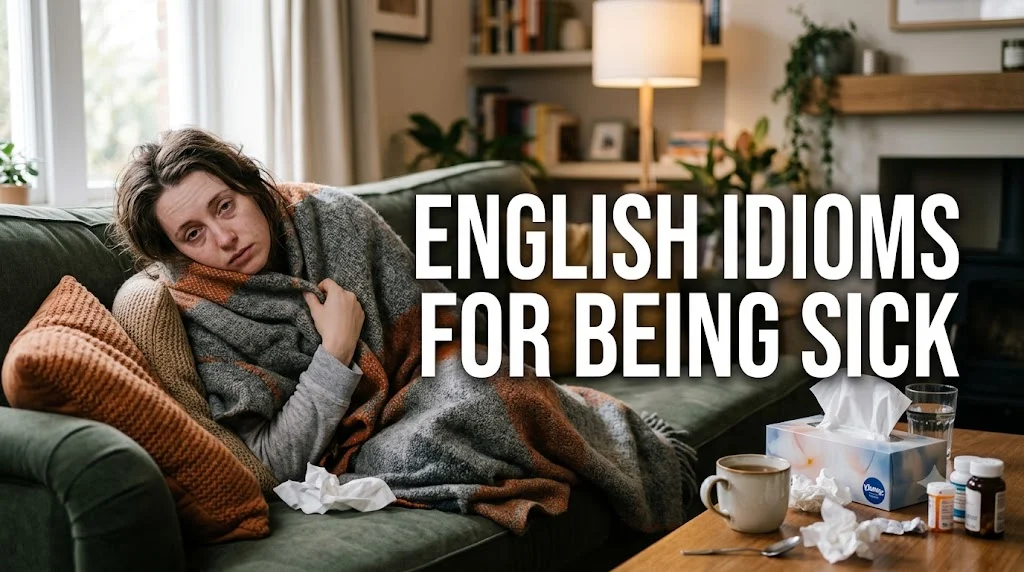
Idioms for “being sick” are expressive phrases used to describe illness, poor health, nausea, exhaustion, or feeling unwell in a vivid, natural, and often emotional way.Examples: under the weather, feeling rough, out of sorts
We all get sick. But how often do you say “I feel unwell” and immediately sense that something sounds too flat, too clinical, or just too plain? That’s because everyday spoken English rarely works that way. Real conversations use idioms, those colorful, expressive phrases that immediately communicate not just what you feel, but how badly you feel it.
When someone says “I’m under the weather” or “I feel like death warmed up,” you don’t need a thermometer reading to understand the situation. The idiom does all the work.
These expressions are everywhere. You’ll hear them in conversations between friends, in casual emails to your boss explaining an absence, in storytelling, and in everyday writing. Yet many English learners skip over them entirely, sticking to basic vocabulary that, while correct, never quite sounds natural.
In this guide, you’ll learn:
Powerful idioms for being sick and feeling unwell
Real meanings and the situations where each one works best
Formal, casual, and creative examples for every idiom
Practical tips to use them naturally without sounding forced
Let’s explore every expression that brings the language of illness to life.
Quick Summary Table
| Situation | Idioms |
|---|---|
| General illness | Under the weather, feeling rough |
| Nausea | Green around the gills, sick to your stomach |
| Extreme sickness | Feel like death warmed up, flat on your back |
| Recovery | On the mend, back on your feet |
| Contagious illness | Spreading like wildfire, come down with something |
| Exhaustion from illness | Run down, burned out |
🤒 Idioms for General Illness and Feeling Unwell
Sometimes you are not seriously sick, but you simply do not feel like yourself. These idioms describe those everyday moments of mild illness, fatigue, or discomfort in a natural and conversational way.
1. Under the Weather
One of the most common health-related idioms in English, under the weather is perfect for describing mild illness without sounding dramatic.
Meaning: Feeling slightly ill or not at your best
When People Use It: Mild sickness, colds, low energy, or feeling unwell
Alternative Expression: Not feeling great
Examples:
Formal: She will not be attending the meeting today as she is feeling a little under the weather.
Casual: I’m a bit under the weather, so I’m staying home today.
Creative: He drifted through the afternoon under the weather, carrying the quiet weight of a cold that hadn’t fully arrived.
2. Out of Sorts
This idiom describes feeling physically or emotionally off without necessarily being seriously ill.
Meaning: Feeling slightly unwell or not your usual self
When People Use It: Mild illness, tiredness, irritability, or feeling off
Alternative Expression: Not yourself
Examples:
Formal: He has been out of sorts for the past few days and may need additional rest.
Casual: I don’t know what’s wrong with me. I’ve been out of sorts all week.
Creative: She felt out of sorts in a way she couldn’t explain, somewhere between exhausted and empty.
3. Feeling Rough
A popular British English expression that vividly describes feeling physically unwell or exhausted.
Meaning: Feeling very unwell or physically bad
When People Use It: Illness, lack of sleep, hangovers, or exhaustion
Alternative Expression: Feeling terrible
Examples:
Formal: He mentioned he was feeling rather rough and needed to leave early.
Casual: I feel so rough today. I barely slept last night.
Creative: Morning arrived, and she felt rough around every edge, her body refusing to cooperate.
Usage Insight: These idioms are ideal for describing everyday illness without making the situation sound overly serious.
🤢 Idioms for Nausea and Stomach Sickness
English has several colorful idioms that vividly describe nausea, stomach pain, and digestive discomfort.
4. Green Around the Gills
Originally linked to seasick sailors, this classic idiom now describes anyone who looks pale or nauseous.
Meaning: Looking or feeling nauseous
When People Use It: Motion sickness, food poisoning, nausea, or stomach illness
Alternative Expression: Looking sick
Examples:
Formal: The patient appeared green around the gills upon arrival.
Casual: Are you okay? You look a little green around the gills.
Creative: He stepped off the boat green around the gills, the waves still rolling through his stomach.
5. Sick to Your Stomach
A versatile idiom that can describe both physical nausea and emotional distress.
Meaning: Feeling nauseous physically or emotionally
When People Use It: Illness, anxiety, disgust, or upsetting news
Alternative Expression: Nauseous
Examples:
Formal: The news left many employees sick to their stomachs.
Casual: That smell is making me sick to my stomach.
Creative: She felt sick to her stomach as she read the letter, each sentence growing heavier than the last.
6. Have a Funny Tummy
A gentle British expression often used with children, though adults use it casually as well.
Meaning: Having a mild stomach ache or digestive discomfort
When People Use It: Mild stomach pain, indigestion, or food-related discomfort
Alternative Expression: Upset stomach
Examples:
Formal: He reported having a funny tummy after the evening meal.
Casual: I’ve had a funny tummy since breakfast.
Creative: The excitement slowly turned into a funny tummy she couldn’t quite explain.
😰 Idioms for Extreme or Serious Sickness
These idioms describe illness at its most severe, when someone feels genuinely terrible or is unable to function normally.
7. Feel Like Death Warmed Up
A memorable idiom that instantly communicates extreme illness and exhaustion.
Meaning: Feeling extremely ill and exhausted
When People Use It: Severe flu, serious illness, or complete exhaustion
Alternative Expression: Feel terrible
Examples:
Formal: After three days with the flu, she looked and felt like death warmed up.
Casual: I feel like death warmed up today.
Creative: He dragged himself to the door feeling like death warmed up, pale and hollow-eyed.
8. Flat on Your Back
This idiom describes illness so severe that someone cannot get out of bed.
Meaning: So ill that you cannot get out of bed
When People Use It: Serious illness, injury, or complete physical exhaustion
Alternative Expression: Bedridden
Examples:
Formal: He was flat on his back for an entire week with pneumonia.
Casual: I was flat on my back all weekend and couldn’t do anything.
Creative: The fever kept her flat on her back for days, the ceiling becoming her entire world.
9. At Death’s Door
A dramatic idiom used to describe someone who is critically ill or extremely close to death.
Meaning: Extremely ill or close to dying
When People Use It: Serious illness or dramatic exaggeration
Alternative Expression: Critically ill
Examples:
Formal: The patient arrived at the hospital practically at death’s door.
Casual: She was at death’s door before she finally started getting better.
Creative: He had stood at death’s door and somehow found the strength to walk away.
Memory Tip: These expressions are powerful and dramatic, so they are best reserved for genuinely serious situations or expressive storytelling.
😴 Idioms for Exhaustion and Feeling Run Down
Feeling sick often comes with extreme fatigue. These idioms describe the physical and mental exhaustion that illness can bring.
10. Run Down
A practical everyday idiom describing physical or mental exhaustion caused by illness, stress, or overwork.
Meaning: Physically depleted and lacking energy
When People Use It: Illness, stress, burnout, or poor health
Alternative Expression: Exhausted
Examples:
Formal: The doctor noted that she appeared quite run down and recommended additional rest.
Casual: I’ve felt so run down lately. I think I’m getting sick.
Creative: He was run down in a way that sleep alone could no longer repair.
11. Off Color
A polite expression, especially common in British English, for looking or feeling slightly unwell.
Meaning: Looking or feeling slightly ill
When People Use It: Mild illness, fatigue, or low energy
Alternative Expression: Not looking well
Examples:
Formal: Several staff members appeared slightly off color this week.
Casual: You look a bit off color. Are you feeling okay?
Creative: She noticed he was off color the moment he walked through the door, his usual brightness faded.
12. Burned Out
Although commonly associated with work stress, this idiom also describes complete physical and emotional exhaustion caused by pushing yourself too hard.
Meaning: Completely exhausted with no energy remaining
When People Use It: Overwork, illness, stress, or emotional exhaustion
Alternative Expression: Completely drained
Examples:
Formal: The prolonged illness left her completely burned out by the end of the month.
Casual: I’m burned out. My body just needs a break.
Creative: He was burned out completely, like a fire that had consumed every last piece of fuel.
🤧 Idioms for Coming Down with Something
These expressions describe the beginning of an illness and the way sickness spreads from one person to another.
13. Come Down with Something
One of the most natural and frequently used idioms for the early stages of illness.
Meaning: To begin developing an illness
When People Use It: Early symptoms or the beginning of sickness
Alternative Expression: Getting sick
Examples:
Formal: It appears he has come down with something and will be absent today.
Casual: I think I’m coming down with something. My throat hurts.
Creative: A quiet heaviness settled over her as she realized she was coming down with whatever everyone else had.
14. Spreading Like Wildfire
A popular idiom describing how quickly an illness moves through a group of people.
Meaning: Spreading extremely quickly
When People Use It: Contagious illnesses and outbreaks
Alternative Expression: Spreading fast
Examples:
Formal: The infection spread like wildfire through the school within days.
Casual: That cold is spreading like wildfire around the office.
Creative: The virus swept through the town like wildfire, touching every street before anyone realized.
15. Not a Well Person
A gentle but meaningful expression describing someone in genuinely poor health.
Meaning: Someone who is seriously or consistently unwell
When People Use It: Long-term illness or poor overall health
Alternative Expression: In poor health
Examples:
Formal: It was evident that he was not a well person and required ongoing medical care.
Casual: She’s just not a well person right now. We should check on her.
Creative: He carried himself like someone who had been not a well person for far longer than anyone knew.
💊 Idioms for Recovery and Getting Better
Recovery idioms focus on healing, improvement, and returning to everyday life after illness.
16. On the Mend
A warm and encouraging idiom that describes someone who is steadily recovering.
Meaning: Recovering from illness or injury
When People Use It: During the healing process
Alternative Expression: Getting better
Examples:
Formal: The patient is on the mend and expected to be discharged by Friday.
Casual: Good news. She’s finally on the mend.
Creative: He was on the mend, and each morning felt brighter than the last.
17. Back on Your Feet
This expression describes returning to normal life after illness.
Meaning: Fully recovered and active again
When People Use It: Returning to work or daily routines after illness
Alternative Expression: Fully recovered
Examples:
Formal: We look forward to having you back on your feet soon.
Casual: You’ll be back on your feet in no time.
Creative: Every step she took after recovering felt like a small victory.
18. Turn the Corner
A hopeful idiom describing the moment when recovery truly begins.
Meaning: To begin recovering after the worst stage of an illness
When People Use It: Serious illnesses and major recoveries
Alternative Expression: Start improving
Examples:
Formal: The doctor confirmed that the patient had turned the corner overnight.
Casual: I think I’ve finally turned the corner. I feel much better today.
Creative: She turned the corner sometime before dawn, waking to find the fever finally gone.
Usage Insight: These recovery idioms add optimism and hope, making them especially effective in personal conversations and storytelling.
🌡️ Idioms for Specific Symptoms
These expressions describe individual symptoms in a vivid and natural way.
19. Bunged Up
A common British idiom describing a blocked nose caused by a cold or allergies.
Meaning: Having a blocked or congested nose
When People Use It: Colds, allergies, and sinus infections
Alternative Expression: Stuffed up
Examples:
Formal: He reported feeling bunged up and struggling to breathe through his nose.
Casual: I’m completely bunged up today.
Creative: He spoke through a muffled voice, completely bunged up from the cold.
20. Running a Temperature
A widely used phrase for having a fever.
Meaning: Having a fever or elevated body temperature
When People Use It: Flu, infections, and viral illnesses
Alternative Expression: Have a fever
Examples:
Formal: The child has been running a temperature since yesterday morning.
Casual: I’m running a temperature, so I’m staying in bed.
Creative: He was running a temperature that made the room seem distant and unreal.
21. Aching All Over
A natural expression describing full-body pain, especially during the flu.
Meaning: Having pain throughout the body
When People Use It: Flu, fever, viral infections, or muscle aches
Alternative Expression: Body aches
Examples:
Formal: The patient reported aching all over, which is consistent with influenza symptoms.
Casual: I’m aching all over. I think I’ve caught the flu.
Creative: She lay still, aching all over, every movement reminding her she was ill.
🏥 Idioms for Long-Term or Chronic Illness
These idioms describe prolonged illness, declining health, and serious medical conditions.
22. Not in Good Shape
A general idiom describing poor physical health or condition.
Meaning: In poor health or physical condition
When People Use It: Chronic illness, aging, or declining health
Alternative Expression: In poor health
Examples:
Formal: The patient is not in good shape and will require long-term care.
Casual: He’s not in good shape. He really needs to see a doctor.
Creative: She could tell he was not in good shape long before he admitted it.
23. Hanging by a Thread
A dramatic idiom describing a critical condition where survival is uncertain.
Meaning: In a critical condition and barely surviving
When People Use It: Serious illness or life-threatening situations
Alternative Expression: Critically ill
Examples:
Formal: Following the operation, the patient was hanging by a thread for several days.
Casual: She was hanging by a thread, but thankfully she’s improving now.
Creative: For days he hung by a thread, hope and fear existing side by side.
24. A Shadow of Your Former Self
A powerful idiom describing someone whose illness has greatly reduced their strength, appearance, or vitality.
Meaning: Much weaker or less healthy than before
When People Use It: Long-term illness, weight loss, or severe physical decline
Alternative Expression: Much changed by illness
Examples:
Formal: After months of treatment, she was a shadow of her former self.
Casual: Have you seen him lately? He’s a shadow of his former self.
Creative: The illness had left her a shadow of her former self, quietly rebuilding the life it had nearly taken away.
🎯 How to Use Idioms for Being Sick Naturally
Knowing illness idioms is only the first step. Using them naturally in the right situation is what makes your English sound fluent, expressive, and authentic. The right idiom can make your message more engaging, while the wrong one may sound exaggerated or inappropriate.
✔ Match the Situation
Not all illness idioms have the same intensity. Some describe minor discomfort, while others are reserved for serious health conditions. Choosing an idiom that matches the situation helps your English sound more natural.
For mild illness, use idioms like under the weather, out of sorts, or off color.
“I’m feeling a bit under the weather today, so I’ll work from home.”
For serious illness, expressions such as flat on your back, at death’s door, or hanging by a thread are more appropriate.
“She was completely flat on her back for two weeks.”
For recovery, use positive idioms like on the mend, back on your feet, or turned the corner.
“He’s on the mend now and should be back next week.”
Usage Insight: Think of illness idioms as a scale. The more serious the condition, the stronger the idiom should be.
✔ Keep the Tone Appropriate
Some illness idioms work well in everyday conversations but sound too informal or dramatic in professional settings. Always consider your audience before choosing an expression.
In formal communication, clear language is usually the safest choice.
“She is currently unwell and will be absent today.”
“He is on the mend and is expected to return next week.”
With friends or family, more colorful idioms sound perfectly natural.
“I feel like death warmed up.”
“I’m completely bunged up today.”
Pro Tip: If you’re unsure which expression to use, choose a simple, neutral phrase. Save stronger idioms for casual conversations and storytelling.
✔ Use Idioms Sparingly
Idioms are most effective when they are used occasionally. Filling every sentence with idioms can make your speech sound unnatural and overly dramatic.
Instead of saying:
“I’m under the weather, flat on my back, aching all over, and feeling like death warmed up.”
Say:
“I’m completely flat on my back. It’s been a rough few days.”
A single well-chosen idiom often has far more impact than several used together.
⚠️ Common Mistakes to Avoid
Even advanced English speakers sometimes misuse illness idioms. Avoid these common mistakes to sound more natural.
Using dramatic idioms for minor illnesses
Saying “I’m at death’s door” because of a slight headache sounds exaggerated and may worry your listener.
Ignoring regional differences
Some expressions, such as bunged up or feeling rough, are much more common in British English than in American English.
Using idioms in formal medical writing
Medical reports, workplace emails, and professional documents should use clear, direct language instead of figurative expressions.
Mixing formal and informal styles
An idiom like green around the gills works well in stories or casual conversations but would sound out of place in a formal business email.
🚀 Practice Method That Actually Works
The best way to remember illness idioms is to use them regularly. These simple habits can help you make them part of your everyday English.
1. Learn Three Idioms Each Day
Focus on a small number of idioms instead of trying to memorize dozens at once. Learn their meanings, tone, and the situations where they are most appropriate.
2. Use Them in Everyday Conversations
Practice using idioms whenever the opportunity arises.
“I think I’m coming down with something.”
“She’s finally on the mend.”
Speaking them aloud helps them become part of your natural vocabulary.
3. Write One Creative Sentence for Each Idiom
Creating your own examples makes each expression easier to remember.
“The flu had me flat on my back for a week, and even the sunlight through the curtains felt exhausting.”
“She was on the mend, but the illness had left her a shadow of her former self.”
💡 Memory Tip
The more personal, visual, and imaginative your examples are, the easier the idioms will be to remember. Connecting each expression to a real experience is one of the fastest ways to make it part of your everyday English.
FAQs
1. What do idioms for being sick mean?
They are expressive phrases that describe illness, poor health, nausea, or recovery in a natural, vivid, and emotionally clear way.
2. Are illness idioms formal or informal?
Most are informal, but several such as “on the mend” and “not in good shape” work well in semi-formal settings too.
3. Can I use these idioms every day?
Absolutely. Many of them such as “under the weather” or “coming down with something” are used constantly in everyday English.
4. Are any of these idioms offensive?
A few dramatic ones like “at death’s door” can sound insensitive if used carelessly. Always consider context and the seriousness of someone’s actual condition.
5. How do I remember so many idioms?
Connect each idiom to a real memory or situation. Personal connection is the single most effective memory tool.
Conclusion
Idioms for being sick bring warmth, personality, and precision to the way you talk about illness in English. Instead of repeating plain words, you now have a full range of expressions that communicate not just what is wrong, but how bad it feels, how it began, how it’s spreading, and whether recovery is on the way.
The key is straightforward: understand the meaning, match the tone to the situation, and practice until these phrases feel like your own. Once you start using idioms like “under the weather,” “flat on your back,” or “on the mend” in your daily conversations, your English will feel noticeably more natural, more human, and far more expressive.
Read More Related Articles:
- Idioms for Snow | Adds Frosty Charm to Your Language In 2026
- Idioms for Anger | Powerful Expressions to Describe Anger Naturally In 2026
- Idioms for Scared | Express Fear Like a Native Speaker In 2026

Loganx River is a passionate writer at IdiomCrafter.com, where he explores the meanings and stories behind everyday expressions. He enjoys breaking down complex phrases into simple, easy-to-understand ideas for readers. When he’s not writing, he spends his time reading and collecting interesting sayings from different cultures.