Quick Answer
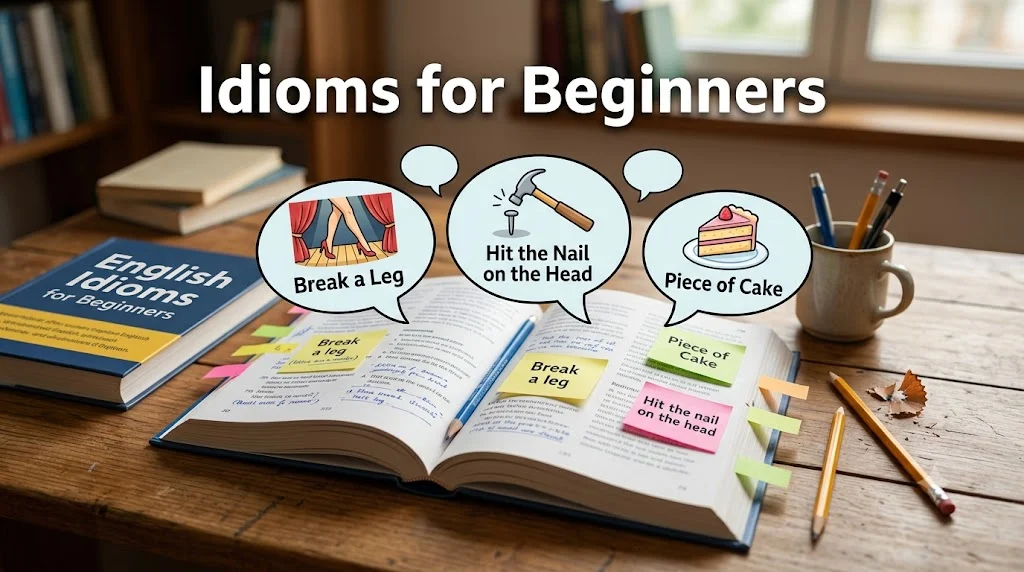
Idioms for beginners are common English expressions where the meaning of the phrase is different from the literal meaning of the individual words. They are used in everyday conversations to express ideas in a more natural, colorful, and engaging way.Examples: break a leg, piece of cake, hit the nail on the head
If you have ever heard a native English speaker say something like “it’s raining cats and dogs” and looked outside expecting to see animals falling from the sky, you already know what an idiom feels like. These expressions can be confusing at first, but once you understand how they work, they become some of the most powerful tools in your language toolkit.
English is full of idioms. They appear in movies, books, news articles, conversations, and workplaces every single day. As a beginner, learning the most common idioms is one of the fastest ways to sound more natural, understand more of what you hear, and connect better with native speakers.
But there is a catch. You cannot guess the meaning of an idiom from its words alone. “Bite the bullet” has nothing to do with bullets. “Spill the beans” has nothing to do with beans. That is what makes idioms tricky and also what makes them so interesting.
In this guide, you will learn everything you need to know as a complete beginner, including what idioms are, why they matter, the most useful idioms organized by situation, and practical methods to start using them naturally in real life.
What Is an Idiom?
An idiom is a group of words that carries a meaning different from what the words literally say. In other words, you cannot understand an idiom by translating each word separately. The phrase as a whole has its own unique meaning that native speakers understand through common usage and cultural familiarity.
For example, “burn the midnight oil” does not mean you are actually burning oil at midnight. It means you are working very late into the night. The image of burning oil for light comes from the days before electricity, but today the phrase simply means working hard and late.
Idioms are deeply embedded in the English language. They exist in every dialect, region, and style of English. Whether you are learning British English, American English, or Australian English, you will encounter idioms constantly.
Understanding idioms helps you in three major ways. First, it improves your listening and reading comprehension because you will no longer be confused when someone uses a phrase that sounds strange on the surface. Second, it improves your speaking because you can express complex emotions or ideas with just a few familiar words. Third, it makes you sound more natural and fluent, which builds confidence in real conversations.
Quick Summary Table
| Situation | Idioms |
|---|---|
| Success and achievement | Piece of cake, Hit the nail on the head |
| Hard work and effort | Burn the midnight oil, Go the extra mile |
| Failure and mistakes | Bite the dust, Drop the ball |
| Emotions and feelings | On cloud nine, Under the weather |
| Time and speed | In the nick of time, Beat around the bush |
| Encouragement | Break a leg, Hang in there |
| Money and wealth | Break the bank, Cost an arm and a leg |
| Relationships | Hit it off, Give someone the cold shoulder |
Idioms for Success and Achievement
When things go well or someone does something correctly, these are the idioms you will hear most often.
1. Piece of Cake
This is one of the first idioms most beginners learn, and for good reason. It is used everywhere.
Meaning: Something that is very easy to do
When People Use It: After completing a simple task or predicting that a task will be easy
Alternative Expression: A walk in the park
Examples:
Formal: The test was a piece of cake after all the preparation.
Casual: Don’t worry about the interview, it’ll be a piece of cake.
Creative: What seemed like a mountain turned into a piece of cake once she understood the method.
2. Hit the Nail on the Head
This idiom comes from carpentry but is used in everyday life to praise accuracy or correctness.
Meaning: To be exactly right about something
When People Use It: When someone makes a very accurate point or finds the perfect solution
Alternative Expression: Spot on, nail it
Examples:
Formal: Your analysis hit the nail on the head.
Casual: You hit the nail on the head with that comment.
Creative: Among a room full of guesses, she alone hit the nail on the head.
3. Pass with Flying Colors
This expression originally described ships returning from battle with their flags still flying proudly. Today it means succeeding with high marks or great performance.
Meaning: To succeed or pass something with a very high score or great performance
When People Use It: After exams, tests, interviews, or challenges
Alternative Expression: Ace it, do brilliantly
Examples:
Formal: He passed the certification exam with flying colors.
Casual: She passed the driving test with flying colors.
Creative: Every challenge he faced, he passed with flying colors and never looked back.
Idioms for Hard Work and Effort
Hard work is a universal theme, and English has many idioms that describe it beautifully.
4. Burn the Midnight Oil
This is a classic idiom that most English learners encounter early on.
Meaning: To work very late into the night
When People Use It: Before deadlines, during exams, or when someone is putting in extra effort
Alternative Expression: Stay up all night, pull an all-nighter
Examples:
Formal: The team burned the midnight oil to finish the project on time.
Casual: I burned the midnight oil studying for today’s quiz.
Creative: Night after night, she burned the midnight oil until the dream became a reality.
5. Go the Extra Mile
This idiom is about doing more than what is expected or required.
Meaning: To put in additional effort beyond what is required
When People Use It: In work, school, or personal situations where someone exceeds expectations
Alternative Expression: Go above and beyond
Examples:
Formal: The staff always goes the extra mile for customer satisfaction.
Casual: He went the extra mile to make sure everything was perfect.
Creative: In a world where most people do the minimum, going the extra mile always stands out.
6. Put Your Nose to the Grindstone
This idiom paints a vivid picture of someone bent down and working intensely without looking up.
Meaning: To work hard and with great focus for a long time
When People Use It: When encouraging someone to focus and work diligently
Alternative Expression: Knuckle down, buckle down
Examples:
Formal: You need to put your nose to the grindstone if you want to meet the deadline.
Casual: Just put your nose to the grindstone and get it done.
Creative: He put his nose to the grindstone for months until the results finally spoke for themselves.
Idioms for Failure and Mistakes
Making mistakes is a part of life, and these idioms help you talk about failure in a natural, expressive way.
7. Bite the Dust
A dramatic idiom often used humorously or casually to describe something that has failed or ended.
Meaning: To fail, end, or be defeated
When People Use It: When a project, plan, relationship, or attempt comes to an unsuccessful end
Alternative Expression: Fall apart, go under
Examples:
Formal: The proposed plan bit the dust due to lack of funding.
Casual: My gym routine bit the dust after two weeks.
Creative: Great ambitions sometimes bite the dust before they ever get a chance to bloom.
8. Drop the Ball
This idiom comes from sports but is used broadly in professional and personal life.
Meaning: To make a mistake, fail at a responsibility, or miss an opportunity
When People Use It: When someone fails to do what they were supposed to do
Alternative Expression: Let someone down, mess up
Examples:
Formal: The marketing team dropped the ball on the product launch.
Casual: I totally dropped the ball on remembering your birthday.
Creative: Even the most reliable people drop the ball sometimes, and that is okay.
9. Back to Square One
When all efforts fail and you must start completely over, this is the idiom to use.
Meaning: To go back to the very beginning after a failed attempt
When People Use It: After a plan or project fails and you need to restart from scratch
Alternative Expression: Start from scratch, go back to basics
Examples:
Formal: After the client rejected the proposal, the team went back to square one.
Casual: The app crashed and I lost all my work. Back to square one.
Creative: She had built so much, but one wrong decision sent her back to square one without warning.
Idioms for Emotions and Feelings
Idioms are especially useful for expressing how you feel, particularly when ordinary words feel too plain.
10. On Cloud Nine
One of the most pleasant idioms in English, used when someone is extremely happy.
Meaning: Feeling extremely happy and joyful
When People Use It: After receiving great news, falling in love, or achieving something wonderful
Alternative Expression: Over the moon, thrilled to bits
Examples:
Formal: After receiving the promotion, she was on cloud nine for days.
Casual: He’s been on cloud nine since he got the job offer.
Creative: The moment she heard the news, she floated on cloud nine above every worry she had ever known.
11. Under the Weather
A gentle and very common way to say you are feeling ill or not quite right.
Meaning: Feeling slightly sick or unwell
When People Use It: When someone is not feeling their best but not seriously ill
Alternative Expression: Not feeling well, a bit off
Examples:
Formal: He will not be attending the meeting as he is feeling under the weather.
Casual: I’m a bit under the weather today, nothing serious.
Creative: She pushed through her presentation even though she had been under the weather all morning.
12. Have Butterflies in Your Stomach
This idiom perfectly captures that fluttery, nervous feeling before something important.
Meaning: To feel nervous or anxious, especially before an important event
When People Use It: Before exams, performances, interviews, or first dates
Alternative Expression: Feel nervous, feel anxious
Examples:
Formal: Many performers admit to having butterflies in their stomach before going on stage.
Casual: I always get butterflies in my stomach before presentations.
Creative: The butterflies in her stomach turned into wings the moment she stepped onto the stage.
Idioms for Time and Speed
Time is always a popular topic in conversation, and English has many idioms built around it.
13. In the Nick of Time
This is a very satisfying idiom that describes arriving or completing something just before it is too late.
Meaning: Just in time, at the last possible moment
When People Use It: When something happens right before a deadline or disaster is avoided
Alternative Expression: Just in time, barely made it
Examples:
Formal: The rescue team arrived in the nick of time.
Casual: I caught the bus in the nick of time.
Creative: She submitted her application in the nick of time, seconds before the portal closed forever.
14. Beat Around the Bush
This idiom is used to describe someone who avoids getting to the point.
Meaning: To avoid the main topic or take too long to get to the point
When People Use It: When someone is being indirect or evasive
Alternative Expression: Get to the point, stop stalling
Examples:
Formal: Please stop beating around the bush and state your concerns clearly.
Casual: Stop beating around the bush. What do you actually want to say?
Creative: He spent an hour beating around the bush before finally saying what everyone already knew.
15. Once in a Blue Moon
A beautiful and poetic idiom for something that rarely happens.
Meaning: Very rarely, almost never
When People Use It: When describing something that happens very infrequently
Alternative Expression: Rarely, hardly ever
Examples:
Formal: Such opportunities come once in a blue moon and should not be wasted.
Casual: We only go out to fancy restaurants once in a blue moon.
Creative: Life-changing moments arrive once in a blue moon, which is exactly why you must be ready when they do.
Idioms for Encouragement
These idioms are used to cheer someone up, wish them luck, or keep them motivated.
16. Break a Leg
One of the most famous idioms in English, especially used in the world of performance.
Meaning: Good luck
When People Use It: Before someone performs, presents, or takes on a challenge
Alternative Expression: All the best, you’ve got this
Examples:
Formal: We wish all our participants the very best. Break a leg out there.
Casual: Your audition is today? Break a leg!
Creative: Three words before she walked on stage changed everything for her: “Break a leg.”
17. Hang in There
A warm, supportive idiom used when someone is going through a tough time.
Meaning: Keep going, stay strong, do not give up
When People Use It: When someone is struggling and needs encouragement
Alternative Expression: Keep going, stay strong, hold on
Examples:
Formal: The road ahead is difficult, but we encourage you to hang in there.
Casual: I know it’s tough right now. Just hang in there.
Creative: When the whole world felt heavy, two words still held her upright: hang in there.
18. Keep Your Chin Up
Another supportive and gentle idiom for difficult moments.
Meaning: Stay positive and confident despite difficulties
When People Use It: When someone is feeling discouraged or sad
Alternative Expression: Stay positive, chin up
Examples:
Formal: Despite the setbacks, the team is encouraged to keep their chin up.
Casual: Things will get better. Keep your chin up.
Creative: He had every reason to fall apart, but he kept his chin up and kept moving forward anyway.
Idioms for Money and Wealth
Money is talked about constantly in everyday life, and idioms make those conversations much more colorful.
19. Break the Bank
A very common idiom that is used in both serious and humorous contexts.
Meaning: To cost so much that it leaves you with very little money
When People Use It: When something is extremely expensive or unaffordable
Alternative Expression: Cost a fortune, empty your wallet
Examples:
Formal: The renovation project threatened to break the bank entirely.
Casual: That vacation doesn’t have to break the bank if you plan carefully.
Creative: She wanted a dream wedding that would not break the bank, and somehow she pulled it off perfectly.
20. Cost an Arm and a Leg
One of the most well-known money idioms in the English language.
Meaning: Something that is extremely expensive
When People Use It: When the price of something is surprisingly or unreasonably high
Alternative Expression: Very expensive, cost a fortune
Examples:
Formal: Healthcare in some countries can cost an arm and a leg.
Casual: That jacket is nice but it costs an arm and a leg.
Creative: He found the apartment of his dreams, but it cost an arm and a leg and a future he had not yet earned.
Idioms for Relationships and People
How we relate to others is one of the richest sources of idioms in English.
21. Hit It Off
A friendly and warm idiom about the instant connection between people.
Meaning: To immediately like someone and get along very well with them
When People Use It: When two people meet and instantly have great chemistry or friendship
Alternative Expression: Click, get along well, bond instantly
Examples:
Formal: The two executives hit it off during the conference.
Casual: We hit it off from the very first conversation.
Creative: They hit it off in the first five minutes and were still talking three hours later.
22. Give Someone the Cold Shoulder
This idiom describes being deliberately ignored or treated with indifference.
Meaning: To deliberately ignore or be unfriendly toward someone
When People Use It: When someone is being avoided or treated rudely without explanation
Alternative Expression: Ignore, snub, freeze out
Examples:
Formal: After the disagreement, his colleague gave him the cold shoulder for weeks.
Casual: Why is she giving me the cold shoulder all of a sudden?
Creative: The cold shoulder she received said more than any argument ever could.
23. See Eye to Eye
A helpful idiom for talking about agreement and understanding between people.
Meaning: To agree with someone or share the same point of view
When People Use It: When describing agreement or the lack of it
Alternative Expression: Be on the same page, agree
Examples:
Formal: The two departments do not always see eye to eye on budget priorities.
Casual: We don’t always see eye to eye, but we respect each other.
Creative: They rarely saw eye to eye, yet somehow they built something extraordinary together.
How to Use Idioms for Beginners Naturally
Learning idioms is one thing. Using them naturally in real conversation is another challenge entirely. Here are the most effective ways to start using idioms without sounding awkward or forced.
Match the Situation
Every idiom has a specific emotional tone and setting. Using the wrong idiom in the wrong situation can confuse people or make you sound unnatural.
For encouragement before an event, use break a leg or hang in there. For talking about something easy, use piece of cake. For talking about something very expensive, use cost an arm and a leg.
When in doubt, ask yourself what emotion or idea you are trying to communicate and then choose the idiom that best fits that feeling.
Keep Tone in Mind
Some idioms are casual and work best in everyday conversations with friends or family. Others are softer and more appropriate in professional settings. Very few idioms sound natural in formal academic or legal writing.
For example, saying “the team went back to square one” in a business meeting is totally acceptable. But saying “I’m on cloud nine” in a formal report might feel too informal for the context.
A good rule of thumb is to observe how native speakers use idioms in the media you consume and mirror their choices.
Use Sparingly
This is one of the most important pieces of advice for beginners. When you first learn idioms, there is a temptation to use as many as possible in every conversation. Resist that urge.
Using too many idioms at once makes your speech feel unnatural and can actually be harder for people to follow. Choose one or two powerful idioms per conversation and let them carry the full weight of your expression.
One well-placed idiom is far more impressive than five that are forced.
Common Mistakes to Avoid
Even learners who study idioms carefully make these common errors. Being aware of them early will save you a lot of confusion.
Mixing up similar idioms. Many idioms sound alike but mean very different things. “Hit the nail on the head” means being correct, while “nail it” means to do something perfectly. They are related but not exactly the same in every context.
Using idioms too literally. If someone tells you to “break a leg,” they are wishing you luck. Do not respond with concern for your physical safety. Always remember that idioms are not meant to be taken literally.
Using informal idioms in formal writing. Idioms like “bite the dust” or “on cloud nine” belong in casual speech and informal writing. In academic essays, business reports, or formal letters, they can undermine your credibility.
Overusing the same idiom. Once you learn an idiom you love, it is easy to overuse it. Vary your language by learning several idioms that carry similar meanings so you can rotate between them naturally.
Guessing the meaning without checking. Because idioms are not literal, guessing their meaning can lead to embarrassing misunderstandings. Always verify the meaning of a new idiom before using it in conversation.
Practice Method That Actually Works
Memorizing a list of idioms is not the same as truly learning them. Here is a method designed specifically for beginners that leads to real, lasting understanding.
Learn Three Idioms Daily
Do not try to learn all your idioms at once. Focus on three per day. Read the meaning, look at example sentences, and take note of the context in which each one is used. Three idioms learned well is far more valuable than thirty idioms barely remembered.
Use Them in Real Conversations
As soon as you learn a new idiom, try to use it that same day. It does not have to be in a big, important conversation. You can simply use it when texting a friend, commenting on social media, or writing in a journal.
The more you activate an idiom in a real context, the faster it moves from short-term memory to long-term knowledge. Something as simple as saying “this traffic is driving me livid” or “that exam was a piece of cake” in casual conversation is a powerful step forward.
Write One Creative Sentence for Each
After learning an idiom, write one creative, emotional, or visual sentence using it. Do not just copy the example from the textbook. Make it personal and imaginative.
For example, instead of writing “she was on cloud nine,” try writing “when the results appeared on the screen, she floated straight onto cloud nine and forgot every sleepless night that came before.”
The more personal and vivid your sentence is, the more deeply the idiom will stick in your memory.
Watch and Listen to Native Content
One of the most effective and enjoyable ways to encounter idioms naturally is through movies, TV shows, podcasts, and YouTube videos made for native English speakers. Pay attention when you hear a phrase that sounds figurative or unusual. Pause, note it down, look it up, and add it to your collection.
This method connects idioms to emotion, tone, and real human situations, which is exactly how native speakers learn them.
FAQs
1. What is an idiom in simple words?
An idiom is a common expression whose meaning is different from the literal meaning of the words in it. For example, “break a leg” means good luck, not actually breaking any bones.
2. Are idioms important for beginners?
Yes, very much so. Idioms appear constantly in everyday English. Knowing even a small number of common idioms will dramatically improve your listening and speaking skills.
3. Can I use idioms in formal writing?
Most idioms are informal and best suited for casual conversations and writing. A few can work in semi-formal situations, but it is safer to avoid them in academic or professional documents.
4. How many idioms should a beginner learn?
Start with twenty to thirty of the most common idioms. Master those before expanding your collection. Quality of understanding matters far more than quantity.
5. Is it okay to use idioms if I’m not a native speaker?
Absolutely. Using idioms thoughtfully shows confidence and fluency. Just make sure you understand the meaning and context before using them, and you will impress any native speaker with your skill.
Conclusion
Idioms are one of the most exciting and rewarding parts of learning English. They bring color, emotion, and personality into your language in a way that simple words never can. Once you understand that idioms are not meant to be taken literally and that each one carries its own cultural meaning and emotional tone, the world of English opens up in a completely new way.
As a beginner, your goal is not to learn every idiom in existence. It is to learn the most common ones deeply, understand when and how to use them, and gradually build your collection through practice and real-life exposure.
Start small. Learn three idioms today. Use one of them in a real sentence before the day ends. Then do the same tomorrow.
Before you know it, idioms will no longer feel like foreign phrases they will feel like your own natural way of speaking.
Read More Related Articles:
- Idioms for Stress | Powerful Expressions to Describe Pressure Naturally In 2026
- 25 Idioms for Smile | Express Warmth and Emotion Naturally In 2026
- Idioms for Soccer | Powerful Expressions to Score in English In 2026

Loganx River is a passionate writer at IdiomCrafter.com, where he explores the meanings and stories behind everyday expressions. He enjoys breaking down complex phrases into simple, easy-to-understand ideas for readers. When he’s not writing, he spends his time reading and collecting interesting sayings from different cultures.