Quick Answer
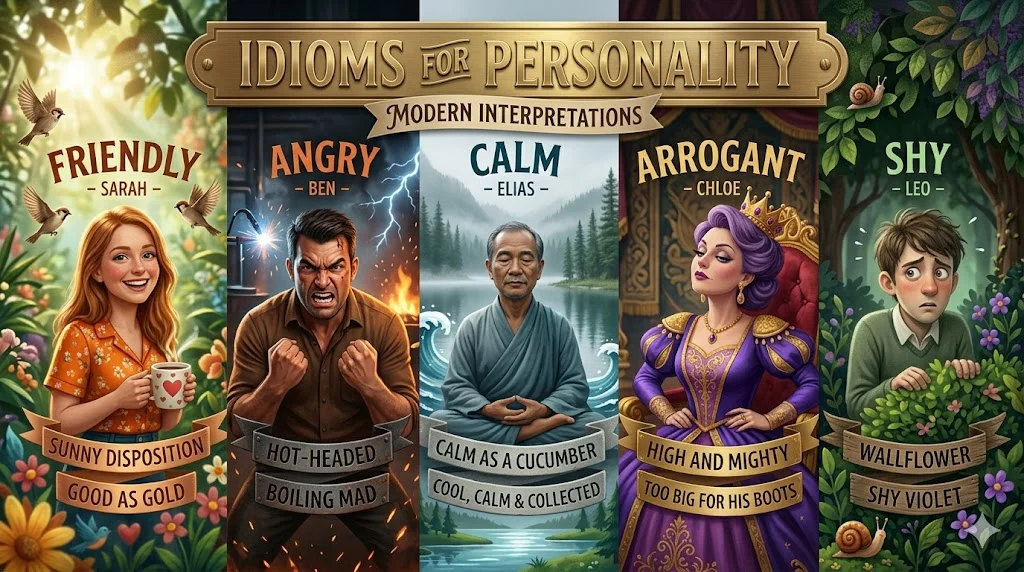
Idioms for personality are expressions used to describe someone’s character, behavior, or attitude in a vivid and natural way.
Examples: a people person, cold fish, life of the party
Every person is differentnand language reflects that beautifully. Instead of simply saying “he’s nice” or “she’s rude,” English gives us a wide range of idioms for personality that bring descriptions to life.
Think about phrases like “life of the party” or “cold fish.” These expressions don’t just describe someone they create a clear image in your mind. That’s the power of idioms.
In real conversations, whether you’re talking about friends, colleagues, or even fictional characters, using idioms makes your language more engaging and natural. But using them correctly requires understanding both meaning and context.
In this guide, you’ll learn:
- Idioms for personality
- Meanings and when to use them
- Formal, casual, and creative examples
- Practical tips for real-life usage
Let’s explore the most expressive idioms that bring personality descriptions to life.
Quick Summary Table
| Personality Type | Idioms |
|---|---|
| Friendly & social | Life of the party, People person |
| Cold & unfriendly | Cold fish, Keep at arm’s length |
| Confident & bold | Full of yourself, Big shot |
| Calm & relaxed | Easygoing, Cool as a cucumber |
| Difficult & rude | Pain in the neck, Short fuse |
😊 Idioms for Friendly & Social Personalities
Some people naturally attract others they are warm, engaging, and easy to connect with.
1. Life of the Party
Some individuals have a natural energy that lights up every room they enter.
Meaning: A very lively and entertaining person
When People Use It: Social gatherings or events
Alternative Expression: Very outgoing
Examples:
Formal: She is often considered the life of the party at events.
Casual: He’s always the life of the party.
Creative: His laughter filled every corner of the room.
2. A People Person
This idiom describes someone who easily connects with others.
Meaning: Someone who enjoys and is good at interacting with people
When People Use It: Workplace or social context
Alternative Expression: Friendly
Examples:
Formal: She is a people person, which makes her ideal for customer relations.
Casual: I’m a people person.
Creative: Conversations flowed naturally around her.
3. Social Butterfly
Some people move effortlessly through social situations.
Meaning: Someone who enjoys socializing and meeting people
When People Use It: Active social personalities
Alternative Expression: Very social
Examples:
Formal: She is known as a social butterfly in the community.
Casual: He’s such a social butterfly.
Creative: She floated from group to group with ease.
💡 Usage Insight: Use these idioms when describing people who are outgoing, friendly, and socially active.
🧊 Idioms for Cold or Unfriendly Personalities
Not everyone is warm some people appear distant or emotionally detached.
4. Cold Fish
This idiom paints a strong picture of emotional distance.
Meaning: Someone who shows little emotion or warmth
When People Use It: Reserved or unfriendly behavior
Alternative Expression: Emotionless
Examples:
Formal: He appeared to be a cold fish during the meeting.
Casual: She’s kind of a cold fish.
Creative: His presence felt distant and uninviting.
5. Keep Someone at Arm’s Length
Some people avoid getting emotionally close to others.
Meaning: Avoid becoming too friendly or close
When People Use It: Emotional boundaries
Alternative Expression: Stay distant
Examples:
Formal: He keeps colleagues at arm’s length.
Casual: She doesn’t let people get close.
Creative: He built invisible walls around himself.
6. Stick in the Mud
This idiom describes someone who resists fun or change.
Meaning: A boring or unadventurous person
When People Use It: Social situations
Alternative Expression: Dull
Examples:
Formal: He is seen as a stick in the mud.
Casual: Don’t be such a stick in the mud.
Creative: He stayed rooted while others moved freely.
😎 Idioms for Confident & Bold Personalities
Confidence can be attractive but sometimes it crosses into arrogance.
7. Full of Yourself
This idiom highlights excessive self-confidence.
Meaning: Too proud or self-centered
When People Use It: Arrogant behavior
Alternative Expression: Conceited
Examples:
Formal: He appeared full of himself during the presentation.
Casual: She’s so full of herself.
Creative: His confidence overshadowed everything else.
8. Big Shot
Some people carry an air of importance wherever they go.
Meaning: An important or influential person
When People Use It: Status or authority
Alternative Expression: VIP
Examples:
Formal: He is considered a big shot in the company.
Casual: He thinks he’s a big shot.
Creative: He walked in like he owned the world.
9. Larger Than Life
Certain personalities feel bigger and more powerful than reality.
Meaning: Very impressive or charismatic
When People Use It: Strong personalities
Alternative Expression: Charismatic
Examples:
Formal: She has a larger-than-life personality.
Casual: He’s larger than life.
Creative: Her presence filled the entire space.
💡 Memory Tip: Think of confidence as a spectrum from healthy confidence to overconfidence.
😌 Idioms for Calm & Relaxed Personalities
Some people remain calm no matter what situation they face.
10. Cool as a Cucumber
A classic idiom for staying calm under pressure.
Meaning: Very calm and composed
When People Use It: Stressful situations
Alternative Expression: Relaxed
Examples:
Formal: He remained cool as a cucumber during the crisis.
Casual: She’s always cool as a cucumber.
Creative: Calm surrounded him like still air.
11. Easygoing
This describes someone who is relaxed and not easily upset.
Meaning: Relaxed and tolerant
When People Use It: Personality traits
Alternative Expression: Laid-back
Examples:
Formal: He has an easygoing nature.
Casual: She’s really easygoing.
Creative: Life seemed to flow effortlessly around him.
12. Go with the Flow
Some people adapt easily without resistance.
Meaning: Accept things as they come
When People Use It: Flexible personalities
Alternative Expression: Adapt easily
Examples:
Formal: He prefers to go with the flow.
Casual: Just go with the flow.
Creative: She moved with life like water.
😤 Idioms for Difficult or Irritating Personalities
Certain personalities can be challenging to deal with.
13. Pain in the Neck
This idiom is commonly used for annoying people.
Meaning: Someone who is irritating
When People Use It: Daily frustrations
Alternative Expression: Annoying person
Examples:
Formal: He can be a pain in the neck at times.
Casual: She’s such a pain.
Creative: His presence tested everyone’s patience.
14. Have a Short Fuse
Some people get irritated very quickly.
Meaning: Easily angered
When People Use It: Low patience
Alternative Expression: Quick-tempered
Examples:
Formal: He has a short fuse under pressure.
Casual: She gets mad quickly.
Creative: His patience burned out in seconds.
15. Rub Someone the Wrong Way
Certain behaviors instantly irritate others.
Meaning: Annoy someone
When People Use It: Personality clashes
Alternative Expression: Bother
Examples:
Formal: His attitude rubbed people the wrong way.
Casual: That really annoyed me.
Creative: Something about him felt off immediately.
🌊 Idioms for Unique or Interesting Personalities
Some people don’t fit into typical categories they stand out.
16. One of a Kind
This idiom celebrates uniqueness.
Meaning: Very special or unique
When People Use It: Positive individuality
Alternative Expression: Unique
Examples:
Formal: She is truly one of a kind.
Casual: He’s one of a kind.
Creative: There was no one quite like her.
17. Black Sheep
Every group has someone who stands out differently.
Meaning: A person who is different from others in a group
When People Use It: Family or social groups
Alternative Expression: Outsider
Examples:
Formal: He is the black sheep of the family.
Casual: I’m the black sheep.
Creative: He walked a path no one else followed.
18. Free Spirit
Some people live life without restrictions.
Meaning: Someone who is independent and carefree
When People Use It: Creative personalities
Alternative Expression: Independent
Examples:
Formal: She is known as a free spirit.
Casual: He’s such a free spirit.
Creative: She moved through life without boundaries.
🧠 Idioms for Intelligent or Thoughtful Personalities
Intelligence also shapes personality in powerful ways.
19. Sharp as a Tack
This idiom highlights quick thinking.
Meaning: Very intelligent
When People Use It: Smart individuals
Alternative Expression: Very sharp
Examples:
Formal: She is as sharp as a tack.
Casual: He’s really sharp.
Creative: His mind moved faster than words.
20. Old Head on Young Shoulders
Some people show wisdom beyond their age.
Meaning: Mature for one’s age
When People Use It: Young but wise individuals
Alternative Expression: Mature
Examples:
Formal: He has an old head on young shoulders.
Casual: She’s very mature.
Creative: Wisdom seemed to guide her early.
21. Deep Thinker
This idiom describes reflective personalities.
Meaning: Someone who thinks deeply
When People Use It: Intellectual traits
Alternative Expression: Thoughtful
Examples:
Formal: He is a deep thinker.
Casual: She thinks a lot.
Creative: His thoughts stretched far beyond the obvious.
🚀 Idioms for Energetic or Ambitious Personalities
Some people are driven, energetic, and always moving forward.
22. Go-Getter
This idiom reflects strong ambition.
Meaning: A highly motivated person
When People Use It: Career or success context
Alternative Expression: Ambitious
Examples:
Formal: She is a go-getter in her field.
Casual: He’s a total go-getter.
Creative: Nothing could slow her momentum.
23. Full of Beans
Energy and enthusiasm define this personality type.
Meaning: Very energetic and lively
When People Use It: Active individuals
Alternative Expression: Energetic
Examples:
Formal: The child was full of beans.
Casual: He’s full of energy.
Creative: Energy sparkled in everything he did.
24. Fire in the Belly
Some people are driven by strong inner motivation.
Meaning: Strong determination
When People Use It: Passionate individuals
Alternative Expression: Driven
Examples:
Formal: He has fire in the belly.
Casual: She’s really driven.
Creative: Passion burned within him constantly.
25. On the Ball
This idiom describes alert and efficient individuals.
Meaning: Quick to understand and act
When People Use It: Smart and active personalities
Alternative Expression: Alert
Examples:
Formal: She is always on the ball.
Casual: He’s really sharp.
Creative: Nothing escaped her attention.
🎯 How to Use Idioms for Personality Naturally
Using personality idioms isn’t just about vocabulary it’s about sounding real, relatable, and expressive. The goal is to make your language feel effortless, not forced.
✔ Match the Situation
Not every idiom fits every context. The key is to adjust your language based on who you’re talking to and where you are.
- Formal Setting (Work, Interviews, Writing):
Use softer, descriptive expressions
→ “He has an easygoing nature.”
→ “She comes across as highly driven and detail-oriented.” - Casual Conversations (Friends, Social Life):
Go for natural, relaxed idioms
→ “He’s super chill.”
→ “She’s a total social butterfly.”
💡 Pro Tip: Think of idioms like outfits you wouldn’t wear the same style to a job interview and a party.
✔ Use Idioms in Real Conversations
Idioms work best when they replace plain, boring descriptions with something more vivid.
- Instead of: He is friendly
👉 Say: He’s a real people person - Instead of: She is very shy
👉 Say: She tends to keep to herself - Instead of: He gets angry quickly
👉 Say: He has a short fuse
✨ Why this works: Idioms add personality to personality descriptions they make your speech sound natural and human.
✔ Don’t Overuse Idioms
Using too many idioms in one sentence can feel unnatural or even confusing.
❌ “He’s a people person, social butterfly, and life of the party all the time.”
✔ “He’s a real people person the kind everyone enjoys being around.”
💡 Golden Rule:
👉 One strong idiom is better than three weak ones.
⚠️ Common Mistakes to Avoid
Even advanced learners make these mistakes here’s how to stay ahead:
- ❌ Using idioms without understanding tone
Some idioms can sound rude or sarcastic if used incorrectly - ❌ Mixing formal and slang unnaturally
→ “The manager is kind of a party animal in meetings” (awkward tone clash) - ❌ Overusing idioms in professional writing
Too many idioms can reduce clarity in reports, emails, or academic work
💡 Quick Fix: If clarity matters more than style, keep idioms minimal.
🚀 Practice Method (That Actually Works)
Instead of memorizing long lists, focus on active usage and real-life exposure.
🌱 Step 1: Learn Smart, Not Hard
Pick 2–3 idioms daily based on themes (friendly, rude, confident, etc.)
🗣️ Step 2: Use Them in Your Own Life
Create real sentences about people you know
→ “My friend is such a go-getter.”
→ “He’s a bit of a lone wolf.”
👀 Step 3: Observe Real Conversations
Watch how native speakers use idioms in:
- Movies
- Podcasts
- YouTube videos
💡 You’ll notice: idioms are used naturally and sparingly, not constantly.
🎭 Step 4: Think in Situations, Not Words
Instead of memorizing meanings, ask:
👉 “When would I actually say this?”
Example:
- “Social butterfly” → parties, networking
- “Cold fish” → emotional distance
🔁 Step 5: Repeat with Variation
Use the same idiom in:
- Formal sentence
- Casual sentence
- Creative sentence
This builds real fluency, not just recognition.
FAQs
1. What are personality idioms?
Expressions used to describe character traits in a vivid way.
2. Are these idioms formal?
Mostly informal but usable in semi-formal contexts.
3. How can I remember them?
Practice and connect them with real people.
4. Can I use them in writing?
Yes, especially in blogs and storytelling.
5. Why use idioms?
They make language more natural and engaging.
Conclusion
Describing personality doesn’t have to be boring or repetitive. With the help of idioms, you can turn simple descriptions into vivid, engaging expressions that truly capture who someone is.
Whether you’re talking about a people person, a cold fish, or a go-getter, these idioms help you communicate more naturally and effectively.
Start using them in your daily conversations, and you’ll notice how your English becomes more expressive, more dynamic, and far more memorable.
Read More Related Articles:
- Idioms for Snow | Adds Frosty Charm to Your Language In 2026
- Idioms for Shock | Expressions to Capture Surprise and Emotion In 2026
- Idioms for Speed | Fast-Paced Expressions to Energize Your English In 2026

Loganx River is a passionate writer at IdiomCrafter.com, where he explores the meanings and stories behind everyday expressions. He enjoys breaking down complex phrases into simple, easy-to-understand ideas for readers. When he’s not writing, he spends his time reading and collecting interesting sayings from different cultures.